

Proboscidea louisianica
- noun
- Specialized
- Proboscidea louisianica is sometimes called devil's claw because of the shape of its fruit.
Examples
-
The distinctive seed pods of Proboscidea louisianica are often collected for decorative purposes.
-
In botanical gardens, Proboscidea louisianica can be found blooming in late summer.
-
The Proboscidea louisianica blooms in late summer.
-
I found a Proboscidea louisianica plant in my garden.
-
Proboscidea louisianica is sometimes called devil's claw because of the shape of its fruit.
-
In botanical gardens, Proboscidea louisianica can be found blooming in late summer.
-
The distinctive seed pods of Proboscidea louisianica are often collected for decorative purposes.
Synonyms

A plant with large pale flowers and a long curved seed pod like a beak
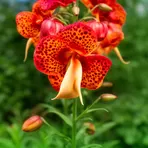
A plant with large spotted flowers and a long curved beak-shaped flower part
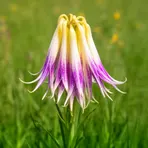
A flowering plant with long beak-like white or yellow flowers marked with purple
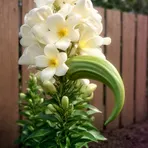
A plant with large pale flowers and a long curved beak-like seed pod

A plant that lives one year with pale flowers marked with purple and a long curved seed pod

A plant with pale flowers spotted purple and a long curved seed pod like a claw

A plant with curved seed pods that look like horns
Surface Forms
Morphology
Proboscidea + louisianica
This is a Latin binomial: a learner who knows 'Proboscidea' (a genus with curved seed pods) and the epithet 'louisianica' (indicating origin from Louisiana) can infer it is a species of Proboscidea associated with Louisiana — the taxonomic type and likely geographic origin are compositional and cross-linguistically signalled. However, the detailed descriptive traits (flower colour, beak-like fruit) are species-specific and not predictably derivable from the name alone, so the transparency is only partial.
Etymology
Proboscidea louisianica comes from the part Proboscidea, a word meaning 'long nose', and louisianica, meaning 'from Louisiana', because its long, curved seed pods look like a beak or a claw. That's why people often call it 'devil's claw' and why the name fits the plant today.

