

Pouteria zapota
- noun
- Specialized
- The fruit of the Pouteria zapota is prized for its smooth texture and sweet flavor.
Examples
-
Farmers in Central America often cultivate Pouteria zapota for its valuable wood and nutritious fruit.
-
Chefs use Pouteria zapota in smoothies and desserts due to its rich, orange flesh.
-
The Pouteria zapota tree can grow up to 30 feet tall.
-
Have you ever tasted Pouteria zapota fruit?
-
Many people enjoy the sweet flavor of the Pouteria zapota fruit in desserts.
-
The Pouteria zapota tree is known for its mahogany-like wood and delicious, egg-shaped fruit.
-
In tropical regions, the Pouteria zapota is cultivated for its nutritious and sweet edible fruit.
Synonyms
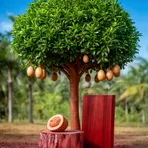
A tropical American tree with sweet egg-shaped fruit and wood like mahogany

A tropical American tree with sweet egg-shaped fruit and wood like mahogany

A tropical tree that grows fruit you can eat
Surface Forms
Morphology
Pouteria + zapota
This is a scientific Latin binomial: 'Pouteria' only signals a genus of tropical trees while 'zapota' is a species epithet with no transparent, dictionary-style meaning for learners. The specific sense (mamey sapote, its sweet egg-shaped fruit and timber) is lexicalized and not derivable from the parts, so a B1 learner who knows the constituent words would not reliably infer the MWE meaning.
Etymology
Pouteria zapota may come from two parts: Pouteria is the scientific name for a group of trees and zapota comes from an old local word for a 'soft' and 'sweet' fruit. Because this tree has smooth, orange, very sweet fruit and useful wood, the name came to mean this particular tropical tree and its fruit.

