
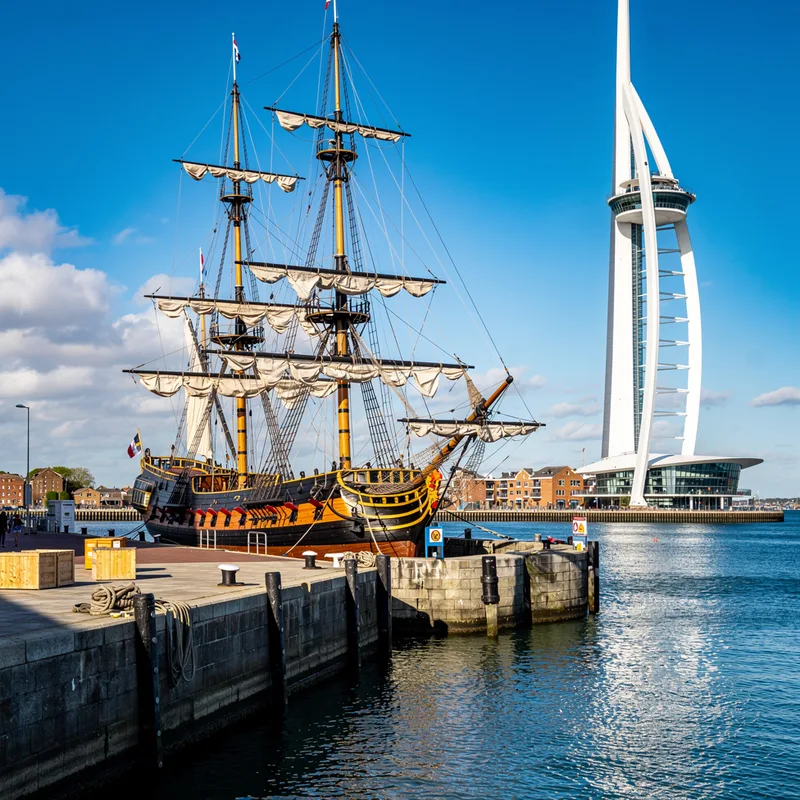
Portsmouth
 21
3.0

- proper noun
- /ˈpɔːtsməθ/
- Come to Portsmouth with Stef and me and watch the race.
- Naval Medical Center Portsmouth
- University of Portsmouth
- Portsmouth Treaty
Loading YouTube…
Watch on YouTubeAnd if you're in Leeds or where I live in Portsmouth, you might be in a council ward where there are thousands of students.
- And if you're in Leeds or where I live in Portsmouth, you might be in a council ward where there are thousands of students.
- But we then went straight down to Portsmouth from there, his old house in Southsea, which he rented a room.
- There's one, there's a Tory MP from Portsmouth, Hampshire, sorry, Southampton, his account's been frozen for a year.
- So we got like we got to the UK and as soon as I docked, like I think I was in, I think it was Plymouth or Portsmouth.
- I do know somebody else whose brother died at a do in Portsmouth around that time.
- You go down to the the IT was in near Portsmouth.
- So yeah, I finally got myself on the team for Portsmouth.
- And they said oh, they're working on and down at just above Portsmouth.
Examples
-
Today, HMS Victory lies in dry dock in Portsmouth on England's South Coast.
-
Of course he's going to stay with my sister in Portsmouth.
-
How was your trip in from Portsmouth, Captain?
-
We grew up together in Portsmouth.
-
I brought a mate from Portsmouth to board with us.
-
Before you know it, we'll be back in Portsmouth.... sailing.
-
Man, Sidney will never believe we got to Portsmouth and back that quick.
-
The timing of Mark coming here is actually really awesome, because next week Portsmouth actually celebrates its first Pride.
-
The Treaty of Portsmouth ending the Russo-Japanese War was concluded in September 1905.
Academic text (2010) -
My parents took me to Portsmouth to explore its fascinating maritime history.
Synonyms
 1
8.4
A nickname for the port city Portsmouth in southern England
Surface Forms
Morphology
Etymology
Portsmouth comes from two simple English words: port ('harbour') and mouth ('where a river opens to the sea'). So the name meant the town at the harbour's mouth, which fits its modern role as a port city on England's south coast.