
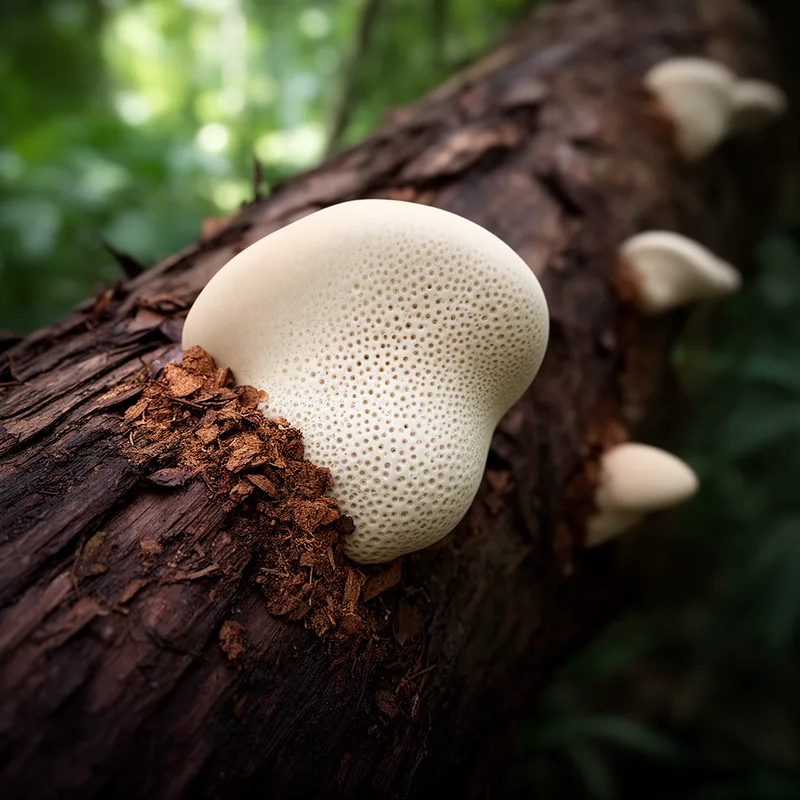
Polyporus tenuiculus
- noun
- Specialized
- Polyporus tenuiculus is a fungus that can be identified by its whitish cap and long pores on dead hardwoods.
Examples
-
The distinctive pores on the underside of Polyporus tenuiculus help differentiate it from similar fungi.
-
Polyporus tenuiculus is commonly found growing on decaying hardwood logs in tropical forests.
-
Scientists studied the effect of Polyporus tenuiculus on the decomposition of fallen tree branches.
-
The Polyporus tenuiculus thrives on decaying hardwood.
-
Have you ever seen Polyporus tenuiculus in the wild?
-
Researchers observed that Polyporus tenuiculus plays a significant role in breaking down decaying wood in forests.
-
The white rot caused by Polyporus tenuiculus can often be seen affecting old oak trees.
Surface Forms
Morphology
Polyporus + tenuiculus
The form is a Linnaean binomial where 'Polyporus' names a fungus genus, so a learner who knows that term can infer this is a species of fungus (taxonomic relation is compositional and cross-linguistically recognizable). However, the specific epithet 'tenuiculus' is Latin and not transparently meaningful to a B1 learner, and the detailed descriptive meaning (cap shape, pores, white rot) cannot be derived from the constituents, so only partial transparency applies.
Etymology
Polyporus tenuiculus comes from Latin words: Polyporus means 'many pores' and tenuiculus means 'thin' or 'small'. The name paints the image of a small, thin fungus with many tiny holes under its cap, which fits this species that grows on dead wood.

