
Polyporus
- noun
- /ˌpɒlɪˈpɔːrəs/
- Specialized
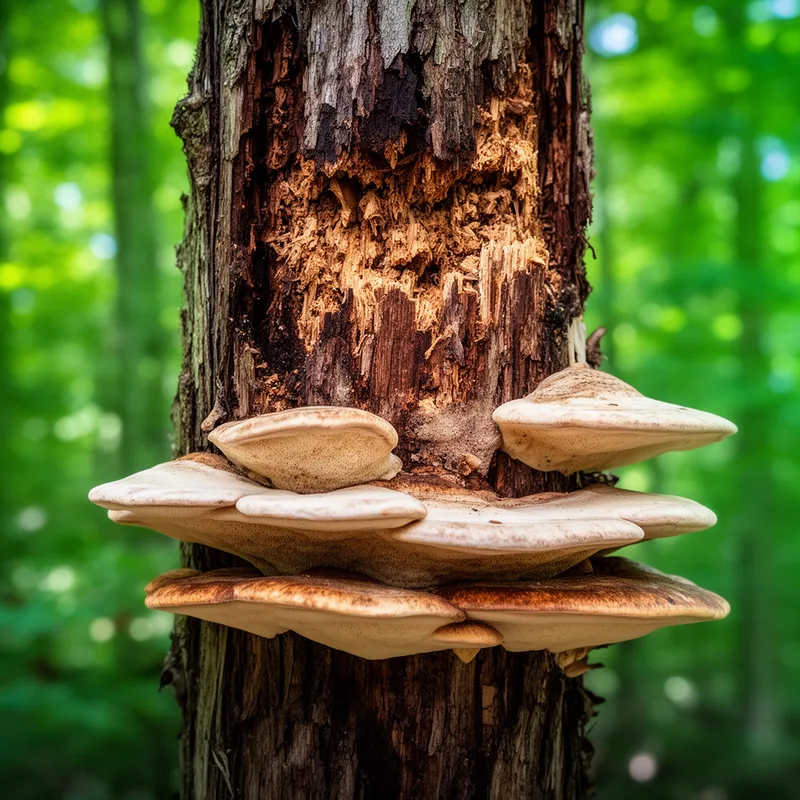
- The fruiting bodies of Polyporus can often be found on the trunks and branches of dead trees.
Examples
-
Several species within the genus Polyporus are known to cause decay in hardwood trees.
-
Fungi from the Polyporus genus often display bracket-like structures on decaying wood.
-
Scientists studied the unique structure of a Polyporus fungus collected from a fallen birch.
-
The Polyporus genus includes various species of fungi.
-
Many trees are affected by Polyporus infections.
-
Researchers observed a Polyporus fungus thriving on an old conifer, highlighting its role as a tree pathogen.
-
The Polyporus fungi were discovered to contribute to the decay of birch trees in the forest.
Compounds
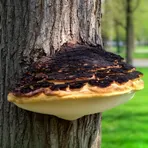
- Specialized
A large shelf mushroom with a scaly cap that turns dark and grows on tree trunks
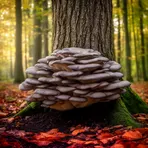
- Specialized
A large grey brown edible mushroom with many overlapping caps that grows at tree bases
Surface Forms
Morphology
Polyporus = poly + porus
This is a Latinized scientific genus name built with a classical combining form, but its full meaning is not readily recoverable for an average learner.
Etymology
Polyporus comes from Greek parts poly- ('many') and poros ('pore' or 'small hole'), so it means 'many pores'. These shelf-like fungi often have lots of tiny holes on the underside where they release spores, so thinking 'many holes' makes the name easy to remember.

