

Polymonium caeruleum van-bruntiae
- noun
- Specialized
- Gardeners admire Polymonium caeruleum van-bruntiae for its delicate blue flowers in late spring.
Examples
-
The Polymonium caeruleum van-bruntiae thrives in moist, wooded habitats across parts of Europe.
-
Conservationists are working to protect wild populations of Polymonium caeruleum van-bruntiae.
-
Look at the Polymonium caeruleum van-bruntiae!
-
The Polymonium caeruleum van-bruntiae is beautiful.
-
Gardeners admire Polymonium caeruleum van-bruntiae for its striking blue flowers that bloom in late spring.
-
The Polymonium caeruleum van-bruntiae prefers shaded areas and requires plenty of moisture to thrive.
-
Conservationists emphasize the importance of preserving the habitats of Polymonium caeruleum van-bruntiae for biodiversity.
Synonyms
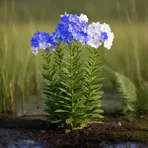
A plant that lives for many years with divided leaves and bright blue or white flowers native to Europe

A plant that lives for several years with feather-like leaves and blue or white flowers called Jacob's ladder

A European plant with leaves of many small leaflets and blue or white flowers
Surface Forms
Morphology
Polymonium + caeruleum + van-bruntiae
This is a Latin botanical name (taxonomic binomial + subspecies) whose constituent elements are non‑English and not lexical items a B1 learner would know; their meanings do not compose into the given gloss. Even if a learner recognised one element (e.g. caeruleum = blue in Latin), the full sense “a particular subspecies of Jacob's ladder” is taxonomic and not transparently derivable from the parts, so it would be unintelligible to typical B1 learners.
Etymology
Polymonium caeruleum van-bruntiae is a plant name that points to both its look and who it honors. The first part, Polymonium, suggests many small leaflets that form a ladder-like shape (like 'Jacob's ladder'), and the last part, van-bruntiae, is a name added to 'honor' a person called Van Brunt who studied or found the plant, so the full name tells you what the plant looks like and who it remembers.

