
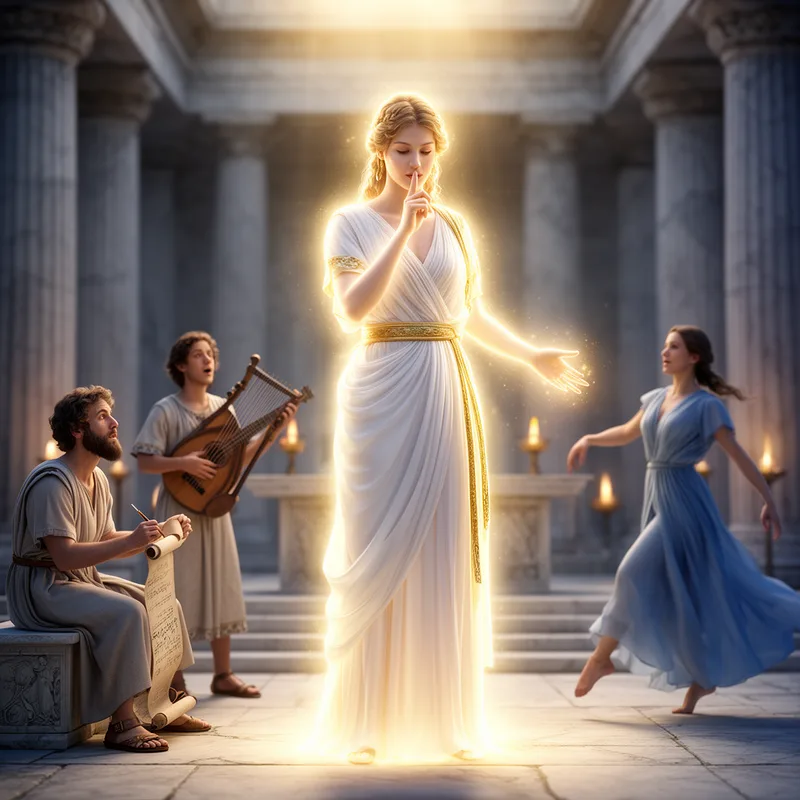
Polyhymnia


 1
9.9
- proper noun
- /ˌpɒlɪˈhɪmniə/
- Literature
- In Greek mythology, Polyhymnia is known as the Muse of sacred poetry.
Examples
-
The mural in the museum shows Polyhymnia holding a finger to her lips, embodying sacred silence.
-
In ancient art, Polyhymnia is often depicted with a pensive expression, symbolizing deep thought.
-
According to legend, Polyhymnia inspired poets and musicians with her divine gift.
-
Many artists seek inspiration from Polyhymnia for their sacred works.
-
In ancient art, Polyhymnia represents the Muse of sacred poetry, inspiring many artists.
-
During the concert, the choir sang a hymn dedicated to Polyhymnia, honoring her role in sacred music.
-
In a statue at the temple, Polyhymnia is depicted with a lyre, symbolizing her influence on both poetry and singing.
Surface Forms
Etymology
Polyhymnia comes from the Greek parts poly- 'many' and hymn 'song', the same root as the English word hymn. As the Muse of sacred poetry and song, her name literally says 'many songs', which helps explain why she inspires religious poetry and music.