
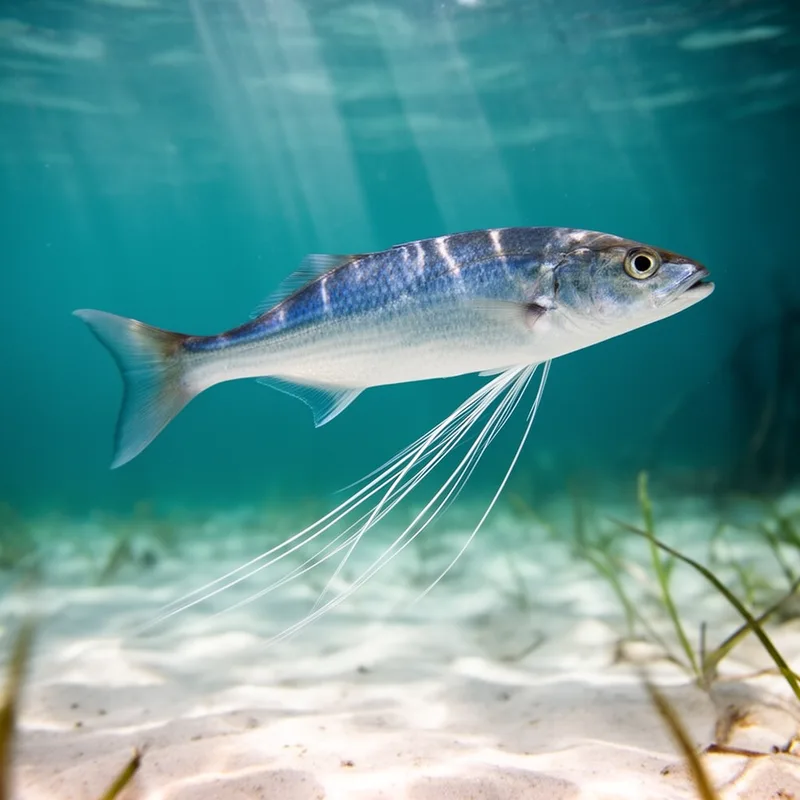
Polydactylus virginicus
- noun
- Specialized
- The Polydactylus virginicus is often identified by its long pectoral filaments near the coast.
Examples
-
Researchers studied the behavior of juvenile Polydactylus virginicus in estuarine environments.
-
Commercial fishers occasionally catch Polydactylus virginicus while targeting other coastal species.
-
The Polydactylus virginicus is known for its distinctive appearance.
-
Many fishermen along the coast target Polydactylus virginicus for its taste.
-
Commercial fishers occasionally catch Polydactylus virginicus while targeting other coastal species.
-
Researchers studied the behavior of juvenile Polydactylus virginicus in estuarine environments.
-
Many fishermen along the coast target Polydactylus virginicus for its taste.
Surface Forms
Morphology
Polydactylus + virginicus
This is a Latin binomial: the first element is a genus (Polydactylus = a group of threadfin fishes) and the second is a specific epithet that typically signals origin or a namesake (virginicus ≈ 'of Virginia'). If a learner knew both constituents and understood taxonomic naming, they could infer it names a species of Polydactylus likely associated with Virginia, but B1 learners typically do not know Latin epithets or scientific naming conventions, so the meaning is only partially predictable.
Etymology
Polydactylus virginicus comes from two name parts: Polydactylus means 'many fingers' and refers to the long, thread-like filaments by the fish's fins that look like extra fingers, and virginicus points to the Virginia coast where the fish was first found. So the name gives an easy picture of this Atlantic threadfin and helps people remember which fish it is.

