
Polyborus plancus
- noun
- Specialized
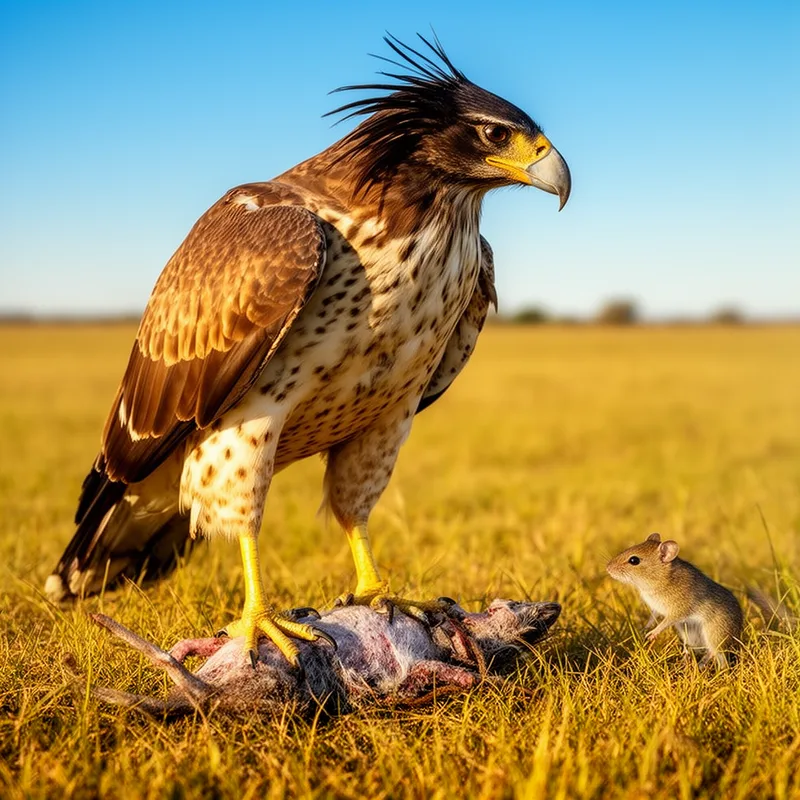
- The Polyborus plancus often scavenges for food as well as hunting small animals.
Examples
-
The distinctive crest makes the Polyborus plancus easy to identify among other raptors.
-
Researchers observed a Polyborus plancus nesting in the grasslands of Argentina.
-
The Polyborus plancus is often seen scavenging in fields.
-
Did you spot the Polyborus plancus near the river?
-
Researchers observed a Polyborus plancus nesting in the grasslands of Argentina.
-
The Polyborus plancus often scavenges for food as well as hunting small animals.
-
The distinctive crest makes the Polyborus plancus easy to identify among other raptors.
Synonyms


 1
9.9
A long-legged hawk that eats dead animals in Central and South America

A South American bird of prey that lives in open grasslands
Surface Forms
Morphology
Polyborus + plancus
This is a Latin binomial (genus + species) functioning as a proper name: knowing 'Polyborus' would cue that it is a bird genus (a type of hawk), but the species epithet 'plancus' carries no transparent English meaning. Because the full sense 'Southern Caracara, a large South American bird' cannot be derived from the constituents without specialist or prior knowledge, the expression is only partially informative to learners.
Etymology
Polyborus plancus may come from old Greek and Latin words that give a clear picture: Polyborus suggests 'eats many things' and plancus was added by the scientist who named it. So the name helps you remember a large South American bird that often 'scavenges' and eats many kinds of food.