

Pogostemon cablin
- noun
- /ˌpoʊɡoʊˈstɛmən ˈkæblɪn/
- Specialized
- The essential oil from Pogostemon cablin is widely used in perfumes.
Examples
-
Many fragrance companies use Pogostemon cablin oil to add depth to their products.
-
Many people love the scent of Pogostemon cablin in their aromatherapy.
-
Pogostemon cablin thrives in warm, tropical climates and is cultivated for its aromatic leaves.
-
Perfume makers highly value Pogostemon cablin for its distinct, earthy aroma.
-
The essential oil of Pogostemon cablin is widely used in the fragrance industry.
-
Pogostemon cablin is a popular ingredient in perfumes due to its rich, musky scent.
-
In recent years, Pogostemon cablin has gained popularity in natural skincare formulations.
Synonyms

 3
8.8
3
8.8

A small bushy plant from tropical Asia whose strong smelling leaves produce oil for perfume
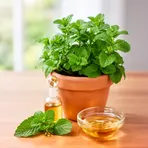
A small mint plant with fragrant leaves used to make perfume oil

A small Indian plant with strong-smelling leaves used in perfumes
Surface Forms
Morphology
Pogostemon + cablin
This is a Latin binomial (genus + species): knowing 'Pogostemon' (a group of fragrant shrubs) lets a learner infer that Pogostemon cablin is a particular type of that plant, so the general idea 'a Pogostemon species' is derivable. However, the specific identity and uses ('patchouli', fragrant oil used in perfumes) are lexicalized and not predictable from the species epithet 'cablin' (which is not a common English word), so the full meaning is only partially transparent to learners.
Etymology
Pogostemon cablin is the Latin, scientific name for the plant most people call patchouli. One popular story says that the common name comes from the Tamil words patchai and ilai, meaning 'green' and 'leaf', so the name gives a simple picture of a green, scented leaf used to make perfume.