
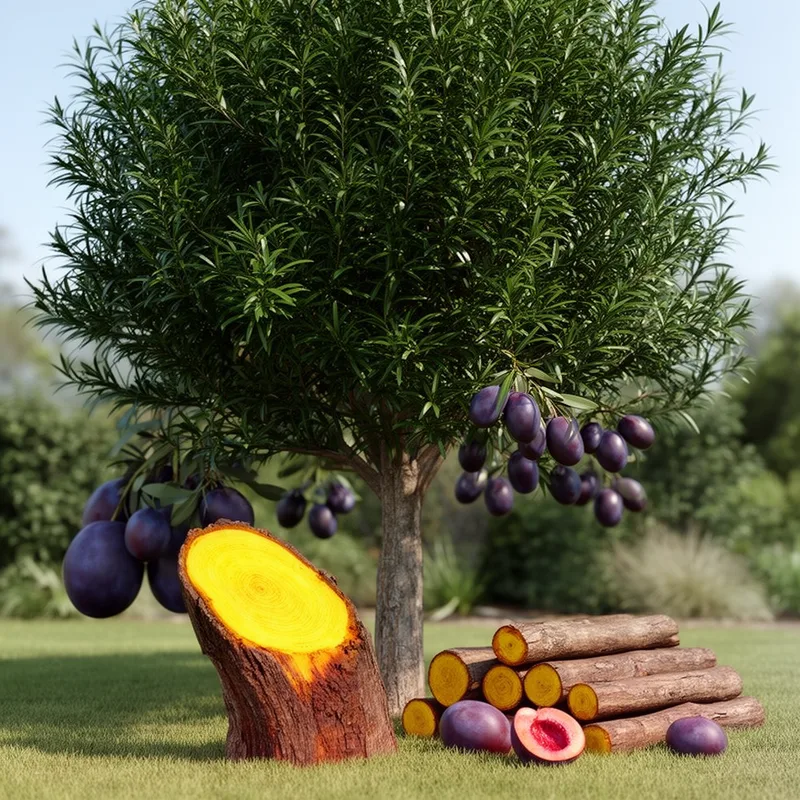
Podocarpus elatus
- noun
- Specialized
- The wood of Podocarpus elatus darkens to a rich brown as it ages.
Examples
-
The Podocarpus elatus is valued both for its timber and edible fruit in eastern Australia.
-
The Podocarpus elatus is known for its beautiful yellow wood.
-
Gardeners often plant Podocarpus elatus as an ornamental tree due to its attractive foliage.
-
Have you ever seen a Podocarpus elatus tree?
-
Many landscape designers select Podocarpus elatus for its elegant shape and vibrant green leaves.
-
In coastal areas of New South Wales, the Podocarpus elatus provides habitat for local wildlife.
-
The Podocarpus elatus can grow over 30 meters tall, making it a striking addition to any garden.
Synonyms
A large Australian tree with yellow wood that turns brown when cut
A large Australian tree with straight yellow wood that turns brown when exposed to air
Surface Forms
Morphology
Podocarpus + elatus
This is a Latin binomial taxonomic name rather than a compositional English phrase; even if a learner knows 'Podocarpus' (a genus of evergreen trees) and somehow knows 'elatus', the scientific label does not transparently yield the species' common name or salient properties (large Australian tree, yellow/brown wood, 'brown pine'). Scientific names function as arbitrary labels across languages and are unpredictable for B1 learners, so the expression is opaque.
Etymology
Podocarpus elatus comes from Greek and Latin: Podocarpus combines parts meaning 'foot' and 'fruit', and elatus means 'tall'. This gives a clear image of a tall tree with fruit on a short stalk like a little foot, so the name fits the large Australian tree often called the brown pine or Illawarra plum.

