
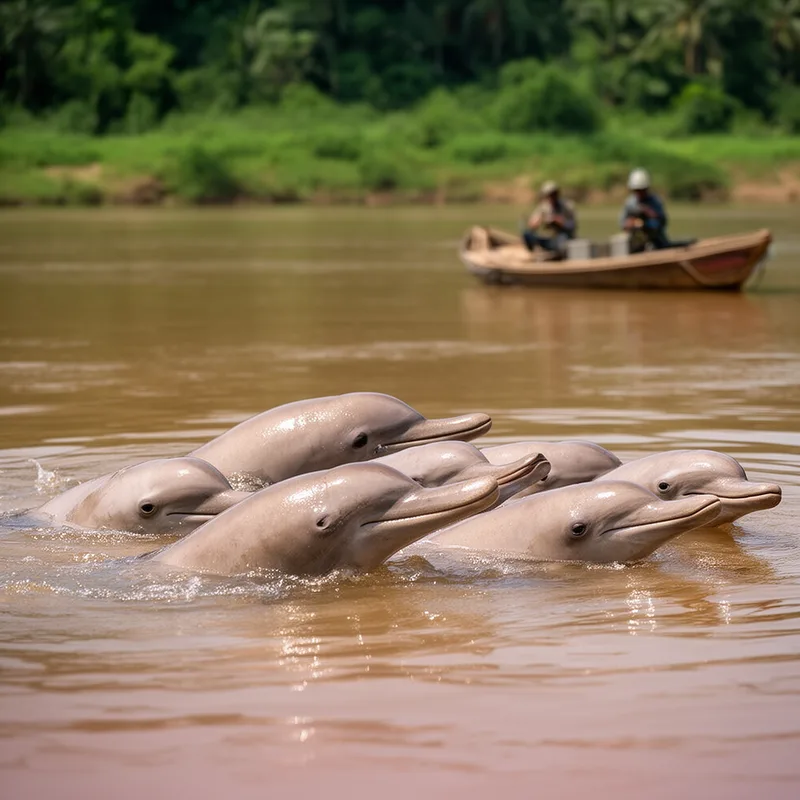
Platanistidae
- noun
- /pləˌtænɪˈstɪdeɪ/
- Specialized
- The Platanistidae family consists of unique river dolphins that inhabit the freshwater rivers of South Asia.
Examples
-
The Platanistidae family includes the famous Ganges river dolphin.
-
Unlike oceanic dolphins, members of Platanistidae are adapted to murky freshwater environments.
-
Scientists study the habitat preferences of Platanistidae to develop better conservation strategies.
-
The family Platanistidae includes the endangered South Asian river dolphin.
-
Did you know that Platanistidae are known for their long snouts?
-
Researchers are conducting surveys to learn more about the Platanistidae and their ecological role in river systems.
-
Conservation efforts aim to protect the Platanistidae from threats such as habitat destruction and pollution.
Surface Forms
Morphology
Platanistidae = Platanista (opaque) = Platanista + idae
The formation uses the specialized Latin taxonomic suffix '-idae' to denote a zoological family, which is systematic in biology but not transparent to average learners.
Etymology
Platanistidae comes from the scientific name Platanista, using the Greek root platy- which means 'broad' or 'flat' and appears in platypus. A helpful way to remember Platanistidae is to imagine a river dolphin with a broad, flat head made for shallow, muddy rivers, so the name fits this family of South and Southeast Asian river dolphins.

