

Plasticine
 1
4.2
1
4.2

- noun
- /ˈplæstɪˌsiːn/
- The sculptor used Plasticine to prototype the initial design of his statue.
- Plasticine figures
- Plasticine clay
- model figures in Plasticine
Examples
-
The courtyard is full of plasticine people, laughing and singing amidst stalls and sideshows.
Fiction book (1994) -
John returns Nicholas to the shelf, placing him amidst a whole family of beautifully sculpted Plasticine figures.
Fiction book (1994) -
The filmmakers are selling the plasticine artwork for $10 a frame through their website.
Blog text (32) -
What really reinforces the learning of anatomy, however, is when students work with plasticine clay to shape their body structures.
Academic text (2002) -
BOROVNIA CASTLE GATES - DAY: The Plasticine figure of Nicholas is hurrying down the passage toward the castle gates.
Fiction book (1994) -
ILAM/Juliet's Bedroom - Day: Pauline and Juliet kneading and shaping Plasticine with their fingers...
Fiction book (1994) -
Pauline notices a row of beautifully sculpted Plasticine horses adorning the mantelpiece.
Fiction book (1994) -
In the visual arts performance tasks, students worked with Plasticine (a clay-like substance), charcoal, drawing pencils, and numerous construction materials.
Academic text (1998) -
Children love to create colorful shapes and figures using Plasticine during art class.
-
For the school project, she chose to make a garden scene out of Plasticine and other craft materials.
Synonyms
 2
8.8
2
8.8
A light material of paper and glue used to make masks and small sculptures
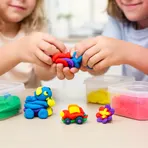
A soft colorful material children shape with their hands to make objects
How Moldable

Surface Forms
Morphology
Etymology
The word Plasticine comes from plastic, a word that originally meant 'to shape' or 'to mold'. So Plasticine is a soft material you can easily shape to make models, and it does not dry out.