
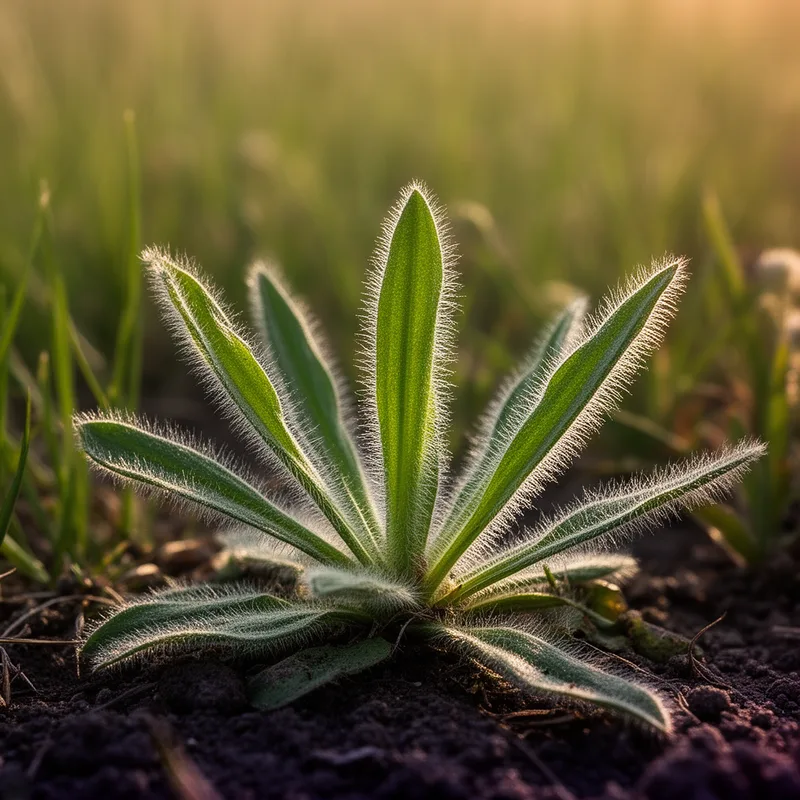
Plantago virginica
- noun
- Specialized
 :
Plantago virginica
:
Plantago virginica
- The leaves of Plantago virginica can be recognized by their distinctive soft hairs.
Examples
-
Plantago virginica is often found growing in open fields and along roadsides in the eastern United States.
-
Gardeners sometimes mistake Plantago virginica for other species of plantain due to its similar appearance.
-
The Plantago virginica is often found in sandy soils.
-
Have you ever seen Plantago virginica in bloom?
-
Plantago virginica is commonly found in damp soil near marshes and wetlands in North America.
-
Many herbalists use Plantago virginica for its medicinal properties, particularly in treating coughs.
-
During spring, the vibrant flowers of Plantago virginica attract various pollinators in the garden.
Surface Forms
Morphology
Plantago + virginica
This is a botanical binomial composed of a genus name (Plantago) and a specific epithet (virginica) that indicates origin/association with Virginia; if a learner knows both constituents (or that -ica/-ica-like epithets mark origin) they can infer it names the Virginia plantain. The construction is compositional and follows a cross-linguistically common scientific naming pattern, so the meaning is directly recoverable from the parts.
Etymology
Plantago virginica may come from Latin: plantago comes from 'planta', meaning 'sole of the foot', because the flat leaves look a bit like a foot and were once used on wounds, and virginica means 'from Virginia', the place it was first found. So the name simply points to a flat-leaf plant from Virginia.

