
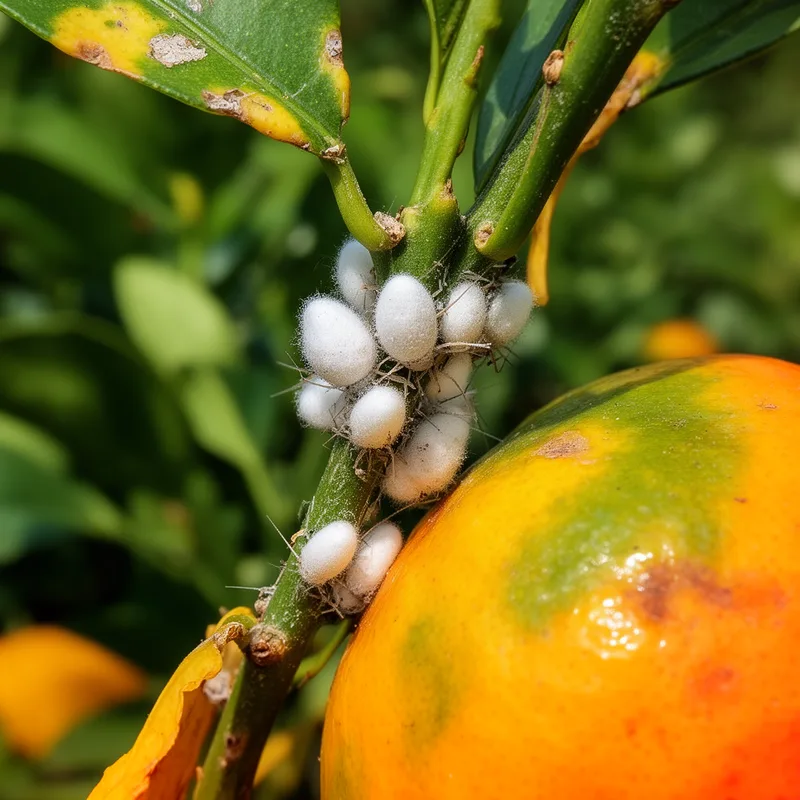
Planococcus
- noun
- /ˌplænəˈkɒkəs/
- Specialized
- Planococcus species are commonly found on citrus trees, causing damage to the fruit and leaves.
Examples
-
The life cycle of Planococcus includes both crawlers and adults, which are important to recognize for pest management.
-
Researchers identified the infestation as coming from Planococcus, a genus notorious for targeting tropical crops.
-
The Planococcus species can damage fruit crops.
-
Farmers are concerned about Planococcus infestations.
-
Planococcus species often infest agricultural fields, making them significant pests for farmers.
-
The presence of Planococcus in greenhouses can lead to serious damage to many plants.
-
Entomologists study Planococcus to develop effective strategies for controlling their populations in crops.
Compounds

- Specialized
A small white insect that eats citrus and other garden plants and harms them
Surface Forms
Etymology
Planococcus comes from the Latin root planus meaning 'flat' and the Greek coccus meaning 'berry'. Think of tiny, round, flat 'berries' on a plant — a simple image that helps you remember these are small mealybugs or scale insects that can be pests of crops.

