

Pisum sativum macrocarpon
- noun
- Specialized
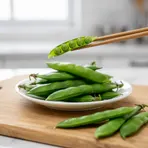
- The pods of Pisum sativum macrocarpon lack the tough inner lining found in common peas.
Examples
-
Chefs often use Pisum sativum macrocarpon in stir-fry dishes due to its tender texture.
-
Pisum sativum macrocarpon is widely cultivated in East Asia for its crisp, edible pods.
-
I love adding Pisum sativum macrocarpon to my stir-fry.
-
Have you tried Pisum sativum macrocarpon in salads?
-
Pisum sativum macrocarpon is a popular ingredient in Asian cuisine because of its tender and sweet edible pods.
-
Many gardeners grow Pisum sativum macrocarpon for its delicious pods that can be eaten raw or cooked.
-
You can easily find Pisum sativum macrocarpon at farmer's markets, especially during the spring season.
Synonyms
 2
2.3
2
2.3

A flat green pod you eat whole when young

A type of pea plant that makes soft pods you can eat whole

A pea plant with thick soft pods that you can eat
Surface Forms
Morphology
Pisum + sativum + macrocarpon
This is a scientific Latin binomial rather than a normal English phrase; two of the three constituents (sativum, macrocarpon) are not common English words and require Latin/root knowledge. The common-meaning 'snow pea' cannot be derived by a B1 learner from these parts without specialist botanical knowledge, so the expression is not transparently compositional.
Etymology
Pisum sativum macrocarpon comes from Latin words: Pisum means 'pea', sativum means 'cultivated', and macrocarpon means 'large pod'. So the name describes a cultivated pea with big, edible pods — the kind we call a 'snow pea'.