

Pisum sativum
- noun
- /ˈpaɪzəm ˈseɪtɪvəm/
- Specialized
- The farmer planted Pisum sativum in rows, hoping for a bountiful harvest of sweet peas this spring.
Examples
-
During the summer, many people enjoy snacking on Pisum sativum straight from the pod.
-
Five plant varieties were collected and identified as Vigna unguiculata, Phascolus mungo, Glycine max, Pisum sativum, and Arachis hypogea.
Academic text (2008) -
To make a fresh salad, she added Pisum sativum for a pop of color and flavor.
Synonyms

 87
1.0
87
1.0

A climbing plant with long green pods that have round seeds you can eat
 1
1.0
1
1.0
A small garden plant with white flowers and long green pods containing edible green seeds
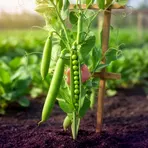
A garden plant that grows small round green vegetables often eaten fresh

A plant grown for its small green seeds that people eat fresh

A plant that grows peas you eat fresh
Surface Forms
Morphology
Pisum + sativum
This is a Latin binomial species name whose parts are Latin morphemes (and one element 'sativum' is listed as unknown), so a B1 learner who knows the provided constituent words would not be able to derive the everyday meaning 'garden pea'. Although 'sativum' ultimately means something like 'cultivated' in Latin, that etymological knowledge is specialized and not accessible to typical learners, making the term non-compositional for them.
Etymology
Pisum sativum is a scientific name from Latin: Pisum means 'pea' and sativum means 'sown' or 'cultivated'. So the name points to a pea that people plant and eat, which is the common garden pea.