
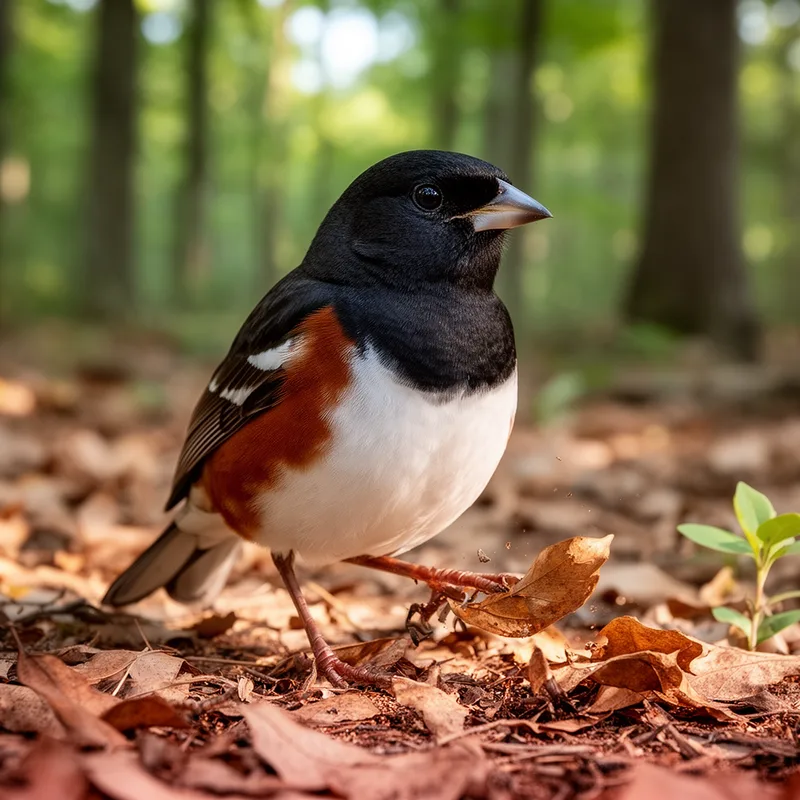
Pipilo erythrophthalmus
- noun
- /ˈpɪpɪloʊ ˌɛrɪθroʊˈfθæləməs/
- Specialized
- The eastern towhee, known scientifically as Pipilo erythrophthalmus, is easily identified by its striking call.
Examples
-
Birdwatchers in the eastern United States often spot Pipilo erythrophthalmus foraging on the forest floor.
-
The Pipilo erythrophthalmus is often found in shrubby areas.
-
Researchers have studied the plumage variations of Pipilo erythrophthalmus across different habitats.
-
Have you ever seen a Pipilo erythrophthalmus in the wild?
-
Birdwatchers in the eastern United States often spot Pipilo erythrophthalmus foraging on the forest floor.
-
The eastern towhee, known scientifically as Pipilo erythrophthalmus, is easily identified by its striking call.
-
Researchers have studied the plumage variations of Pipilo erythrophthalmus across different habitats.
Synonyms

 2
9.9
2
9.9

A North American songbird with a long tail and bright colors
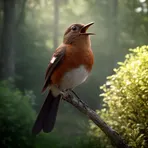
A small brown bird with a long tail and a clear two-note call
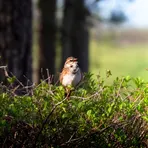
A small North American songbird often found in bushes at forest edges
Surface Forms
Morphology
Pipilo + erythrophthalmus
This is a Latin scientific binomial rather than a compositional English phrase; a B1 learner who knows 'Pipilo' only as a genus label and has no dictionary entry for 'erythrophthalmus' cannot derive 'eastern towhee' from the parts. The meaning depends on taxonomic knowledge and classical-root interpretation unavailable to average learners, so it is not transparently predictable.
Etymology
Pipilo erythrophthalmus may come from words that make a simple picture: Pipilo is from a word for a little 'chirping' bird, and erythrophthalmus is made of parts meaning 'red' and 'eye'. That's why the name helps you picture the eastern towhee as a chirpy bird with a reddish eye area.