
Pinaceae


 1
8.8
- noun
- /ˈpɪnəˌsi/
- Specialized
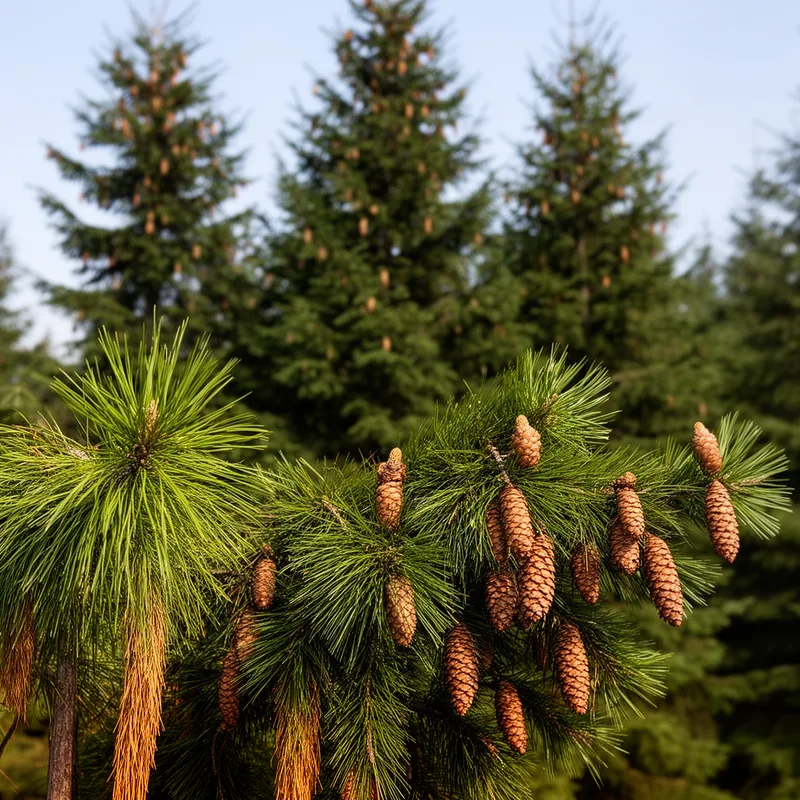
- The cones of the Pinaceae are key characteristics used for identifying different genera within the family.
Examples
-
Many forests in the Northern Hemisphere are dominated by the Pinaceae family, especially pines and spruces.
-
The Pinaceae family includes many well-known trees.
-
Botanists classify firs and cedars under the Pinaceae due to their similar needle-like leaves.
-
Many species in the Pinaceae family are used for timber.
-
The Pinaceae family includes many popular trees, such as the towering pine and majestic cedar.
-
Forests dominated by Pinaceae provide essential habitats for various wildlife.
-
When hiking in the mountains, we enjoyed the fresh scent of Pinaceae trees surrounding us.
Synonyms
 1
4.4
A family of trees that make cones, like pines, firs, and spruces
Surface Forms
Morphology
Etymology
The word Pinaceae comes from the Latin Pinus, meaning 'pine', plus the plant-family ending -aceae, which shows a plant family. So Pinaceae literally means the 'pine family', and that is why it names a group of pine-like, needle-leaved trees such as pines, firs and spruces.