

Picea rubens
- noun
- /ˈpaɪsiə ˈruːbənz/
- Specialized
- Timber companies value Picea rubens as a chief source of high-quality lumber in the region.
Examples
-
Paper mills frequently use the wood of Picea rubens for pulp production.
-
The forests of New England are home to the majestic Picea rubens.
-
The Picea rubens is commonly found in the Appalachian Mountains.
-
Many builders prefer Picea rubens for its durability.
-
Paper mills frequently use the wood of Picea rubens for pulp production.
-
Timber companies value Picea rubens as a chief source of high-quality lumber in the region.
-
Many builders prefer Picea rubens for its durability.
Synonyms
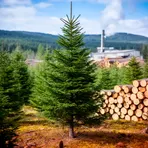
A medium-sized evergreen tree from eastern North America that people use for wood and paper

A medium-sized tree with needles whose wood is used for building and paper

A medium-sized evergreen tree from eastern North America that people use for lumber and paper
Surface Forms
Morphology
Picea + rubens
This is a scientific binomial formed from a genus name ('Picea' = spruces) plus a species epithet; if a learner recognized 'rubens' as the Latin adjective for 'red' they could compositionally infer 'red spruce'. However, 'rubens' is not an English lexical item (marked '[Word not found]') and average B1 learners will not know Latin epithets or botanical naming, so the meaning is only partially transparent to those with relevant background knowledge.
Etymology
The plant name Picea rubens comes from Latin words: Picea means 'spruce' and rubens means 'reddish', because the tree often has a red tinge in its bark and young twigs. So the name literally means the 'red spruce' and helps you remember which spruce it is.

