
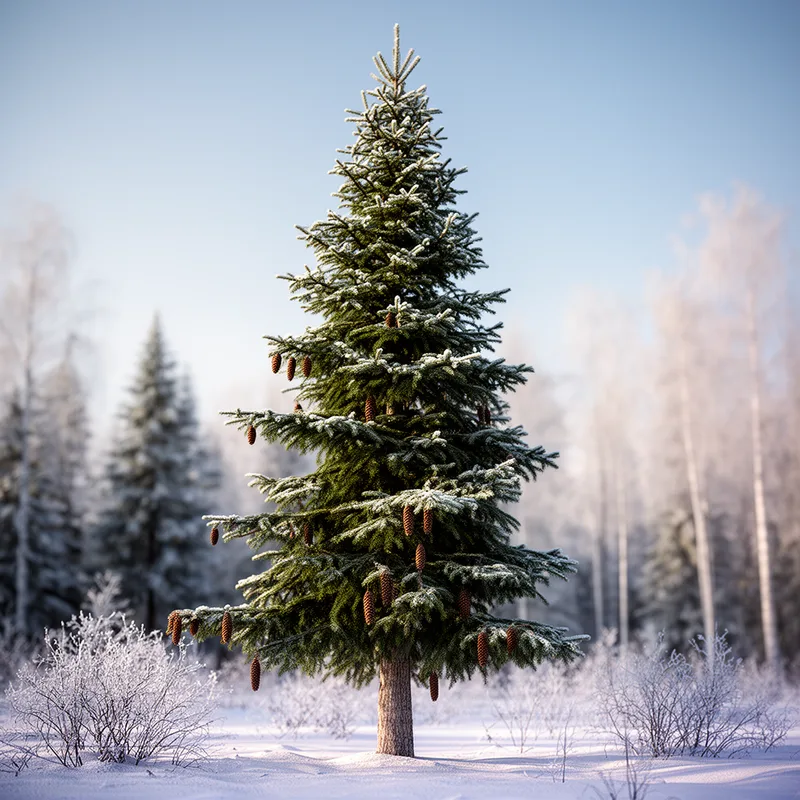
Picea obovata
- noun
- Specialized
- The dense forests of Siberia are dominated by Picea obovata and other conifers.
Examples
-
The cones of Picea obovata differ slightly from those of the Norway spruce.
-
Botanists have found Picea obovata adaptable to various cold climates.
-
Look at that tall Picea obovata!
-
The Picea obovata is known for its tall stature.
-
The cones of Picea obovata are often used for identification by botanists.
-
In northern Europe, Picea obovata is a key species in the coniferous forests.
-
You can find Picea obovata thriving in cold and harsh climates.
Synonyms

A tall evergreen tree from northern Europe and Asia with long needles that survives very cold winters
Surface Forms
Morphology
Picea + obovata
The genus name 'Picea' clearly marks the item as a spruce, so a learner who knows 'Picea' can infer the MWE refers to a kind of spruce. However, the species epithet 'obovata' is a Latin botanical term (and is not glossed here) and does not transparently convey the full sense 'a tall spruce native to northern Europe and Asia'; species names often encode morphological or taxonomic detail that is opaque to general B1 learners. Because the genus gives partial information (category) but the specific sense and provenance are not predictable from the parts, the expression is only partially transparent.
Etymology
Picea obovata comes from Latin: Picea was an old word for 'spruce' and obovata means 'egg-shaped but wider at the top'. So the name gives a simple picture of a 'spruce' with egg-shaped cones, which helps you remember it is a kind of spruce tree.

