
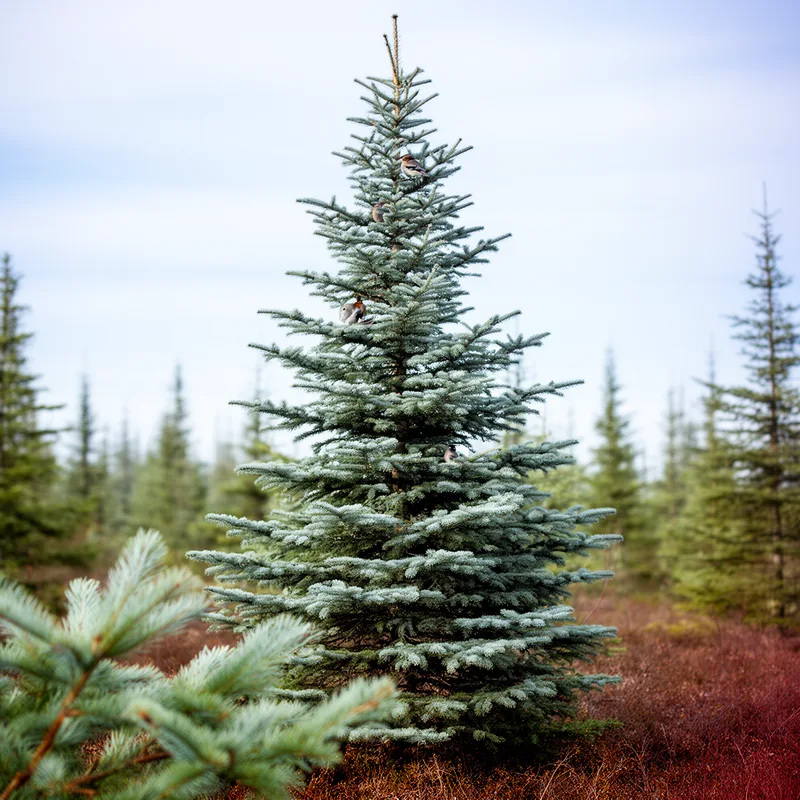
Picea glauca
- noun
- /ˈpaɪsiə ˈɡlɔːkə/
- Specialized
- The Picea glauca tree is known for its beautiful blue-green needles.
Examples
-
Foresters often plant Picea glauca to reforest areas in northern climates.
-
The Picea glauca in their backyard provides shelter for many birds year-round.
-
Botanists studied the growth patterns of Picea glauca in varying soil conditions.
-
Many gardeners prefer Picea glauca for its hardiness.
-
The Picea glauca is often used in landscaping because of its attractive appearance and resilience.
-
In the winter, the Picea glauca trees create a stunning contrast against the snow with their dark trunks and bright needles.
-
Many wildlife species depend on the Picea glauca for food and habitat throughout the year.
Synonyms


 1
5.6
1
5.6
A medium-sized evergreen tree with short blue-green needles and thin cones that grows in cold places
Surface Forms
Morphology
Picea + glauca
This is a Latin binomial (taxonomic) name rather than a compositional English phrase; the second element 'glauca' is not an English word in the provided data and its meaning (glaucous/blue‑green or 'white' in common name) is not obvious to a B1 learner. Even if a learner knows that Picea denotes spruces, the species epithet is specialised Latin terminology and the overall referent (the white/glaucous spruce) is not transparently derivable from everyday English knowledge.
Etymology
Picea glauca is a name made of words that describe the tree. Picea means 'spruce' and glauca means 'blue-green', a clear picture of its pale needles, so the name helps you remember this is the 'white spruce'.