
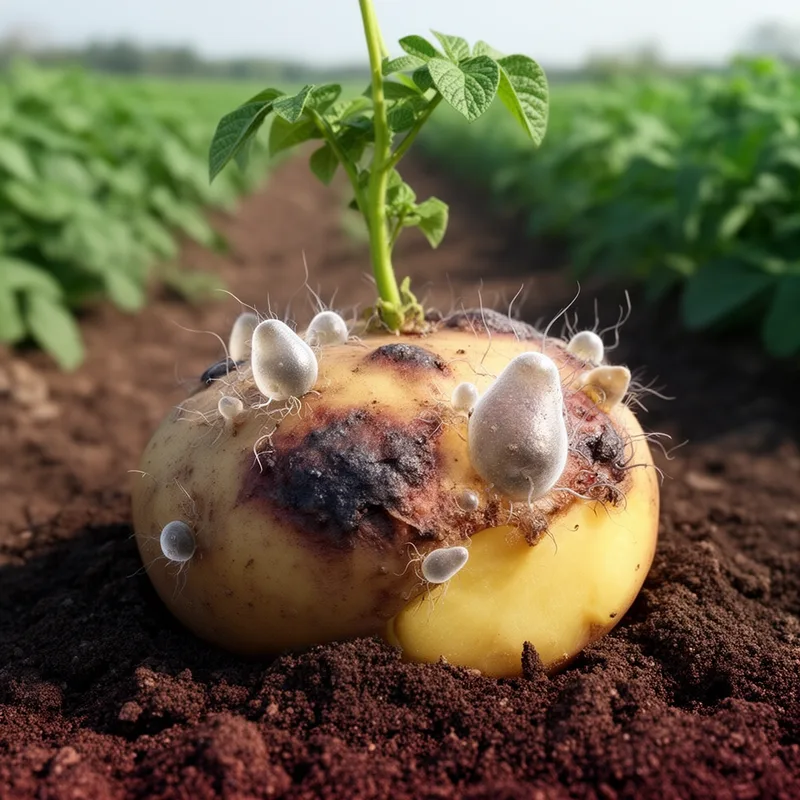
Phytophthora
- noun
- /faɪˈtɒfθərə/
- Specialized
- Phytophthora infestans can destroy a potato crop—either in the field or in storage—in just a few weeks.
- Phytophthora root rot
- Phytophthora root
- Phytophthora infestans
Examples
-
The spread of Phytophthora can lead to devastating losses in crop production if not managed effectively.
-
Williams 82 is considered by many to be one of the most important soybean varieties ever bred; it was the first with resistance to 19 of the 24 races of Phytophthora root rot.
Academic text (2005) -
A product successful in laboratory testing was found and applied to the field, with subsequent testing indicating no detectable Phytophthora in the soil or plant roots.
Academic text (2000) -
The nursery industry first observed that composted tree bark seemed to suppress Phytophthora root rots.
Academic text (2000) -
Heavy Phytophthora root rot losses occurred on a regular basis on rhododendron, azalea, and other crops highly susceptible to this disease.
Academic text (2000) -
One grower with a serious Phytophthora problem screened different composts for the potential to inhibit the specific organism isolated from his field.
Academic text (2000) -
It has been shown that Pythium and Phytophthora root rots can indeed be controlled most effectively in composted bark-amended container media.
Academic text (2000) -
During the 1960s, the nursery industry encountered serious problems with Phytophthora cinnamomi because it was often reintroduced after soil fumigation with infected plants or in irrigation water.
Academic text (2000) -
It was caused by the introduction of an endemic fungal disease, Phytophthora infestans, to which there were no resistant potato strains until the late twentieth century.
Academic text (2018) -
In greenhouses, Phytophthora can thrive in humid conditions, making it critical for growers to maintain proper ventilation.
Synonyms
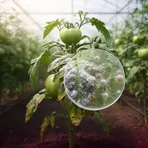
A living thing that causes disease in plants, for example a fungus or a virus
Compounds

- Specialized
A fungus-like living thing that causes brown rot in citrus fruits like oranges and lemons
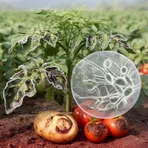
- Specialized
A fungus-like organism that causes late blight, a disease that rots potato and tomato plants
Surface Forms
Morphology
Phytophthora = phyto + phthora
The name is a scientific coinage from Greek combining forms ('phyto-' = plant, '-phthora' = destruction) that are not standalone English words, so an average B1 learner cannot derive the meaning from familiar English components.
Etymology
Phytophthora comes from Greek parts phyto- meaning 'plant' and -phthora meaning 'destruction'. So, Phytophthora is literally a 'plant destroyer', which explains why these organisms cause serious diseases in crops and garden plants.

