
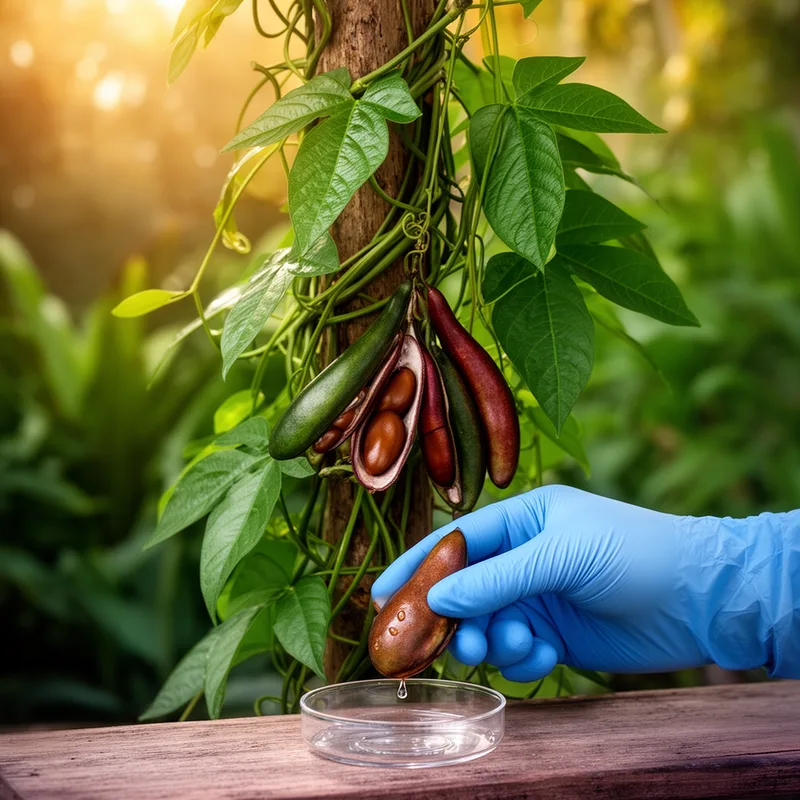
Physostigma venenosum
- noun
- Specialized
- Scientists extract physostigmine from the seeds of Physostigma venenosum for use in medicine.
Examples
-
The poisonous Calabar bean comes from the Physostigma venenosum plant.
-
Physostigma venenosum is native to the tropical regions of West Africa.
-
The Physostigma venenosum is known for its toxic properties.
-
Farmers in Africa often avoid Physostigma venenosum due to its toxicity.
-
The poisonous Calabar bean comes from the Physostigma venenosum plant.
-
Farmers in Africa often avoid Physostigma venenosum due to its toxicity.
-
Physostigma venenosum is native to the tropical regions of West Africa.
Synonyms

A tropical African climbing plant that makes beans used in medicine and once used as a poison
Surface Forms
Morphology
Physostigma + venenosum
This is a Latin binomial scientific name (a taxonomic label), not a compositional English phrase; its meaning (a particular toxic vine) is a named category rather than the sum of ordinary English words. The second element is Latin and not a familiar English word for a B1 learner, and the overall label is specialized and unpredictable from the parts, so learners who only know the constituents would not reliably infer the meaning.
Etymology
Physostigma venenosum is a scientific name that points to what the plant is: physostigma hints at its marked seed and venenosum means 'poisonous'. So the name helps you remember that this West African vine makes the 'Calabar bean', a 'poison' that people later used in medicine.

