
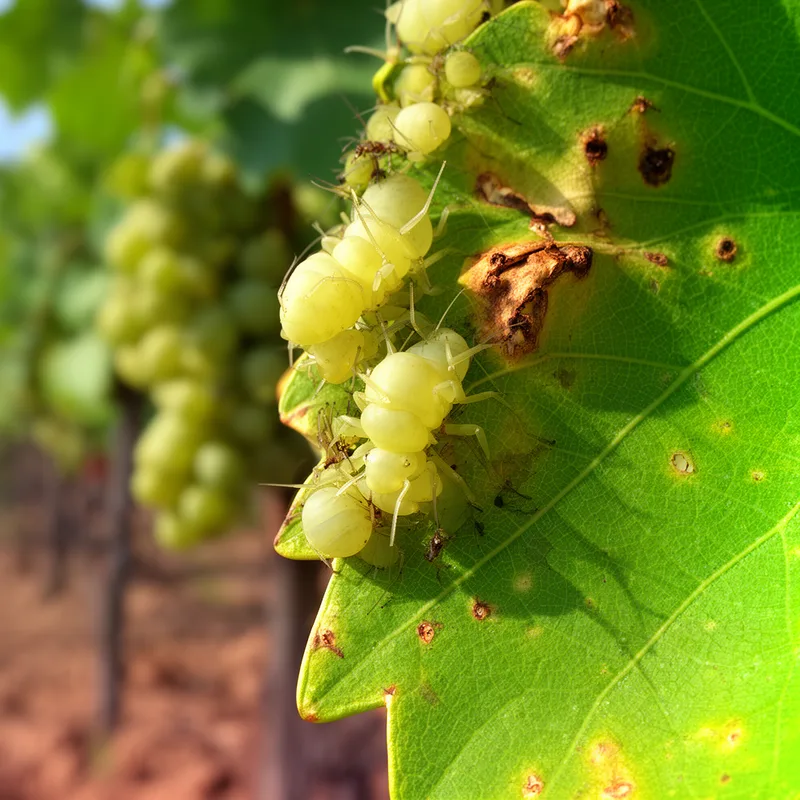
Phylloxeridae
- noun
- /ˌfɪləkˈsɛrɪdi/
- Specialized
- The Phylloxeridae have devastated vineyards in several countries due to their parasitic attacks on grapevines.
Examples
-
Research on Phylloxeridae has helped protect crops from serious infestations.
-
The Phylloxeridae family includes several species that harm crops.
-
Many species within the Phylloxeridae family are notorious for causing plant diseases.
-
Phylloxeridae are pests!
-
Many species within the Phylloxeridae family are notorious for causing plant diseases.
-
The Phylloxeridae have devastated vineyards in several countries due to their parasitic attacks on grapevines.
-
Research on Phylloxeridae has helped protect crops from serious infestations.
Surface Forms
Morphology
Phylloxeridae = Phylloxera (opaque) = Phylloxera + idae
A taxonomic family name formed by adding the scientific suffix '-idae' to the genus name 'Phylloxera'; this naming convention is specialized and not derivable by average learners from the components.
Etymology
Phylloxeridae comes from Greek parts: phyllo- 'leaf' and xero- 'dry', and the ending -idae shows it is a family of insects. These small plant-feeding insects often make leaves dry or damaged, which is why the name fits these pests.

