
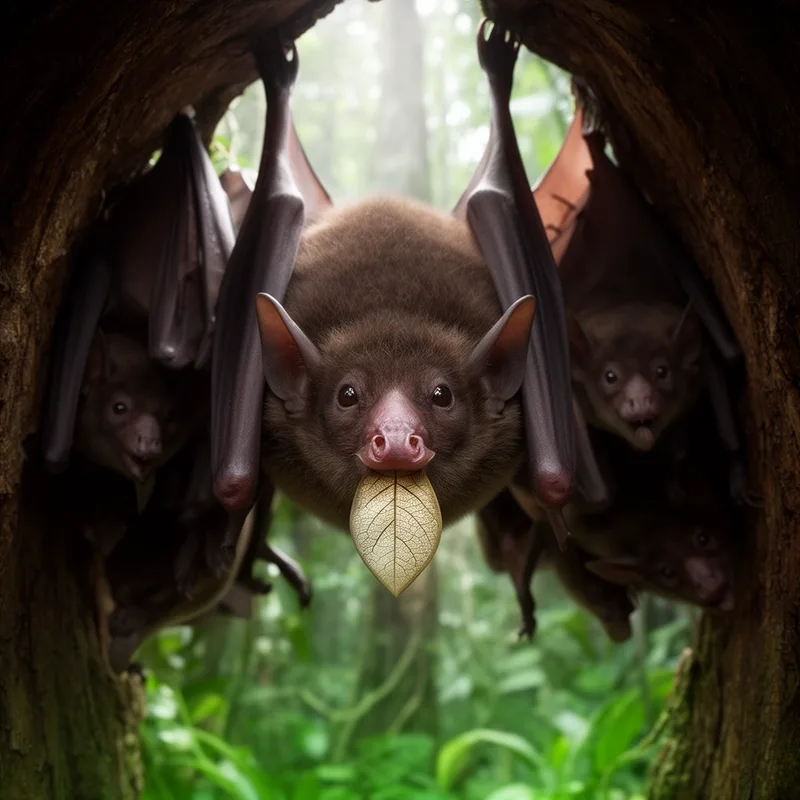
Phyllostomus hastatus
- noun
- Specialized
- The Phyllostomus hastatus is noted for its unusually sophisticated social structure among bats.
Examples
-
Researchers observed a group of Phyllostomus hastatus roosting in a hollow tree in Panama.
-
Conservationists are concerned about habitat loss affecting populations of Phyllostomus hastatus in the Amazon rainforest.
-
The Phyllostomus hastatus can be found in tropical forests.
-
Have you ever seen a Phyllostomus hastatus in the wild?
-
Conservationists are concerned about habitat loss affecting populations of Phyllostomus hastatus in the Amazon rainforest.
-
Researchers observed a group of Phyllostomus hastatus roosting in a hollow tree in Panama.
-
The Phyllostomus hastatus is noted for its unusually sophisticated social structure among bats.
Surface Forms
Morphology
Phyllostomus + hastatus
This is a Latin scientific binomial (a proper name) rather than a compositional English phrase; an average B1 learner knowing the listed constituents would not be able to derive the full meaning from them because 'hastatus' is not a common English word and the pair functions as a taxonomic label. Although 'Phyllostomus' signals a type of leaf-nosed bat, the overall expression is a species name and its referent is not transparently predictable from everyday word meanings.
Etymology
Phyllostomus hastatus comes from words that mean 'leaf mouth' (Phyllostomus) and 'spear-like' (hastatus). This name creates a clear picture of the bat's leaf-shaped nose and pointed face, so it helps you remember this large leaf-nosed bat.

