
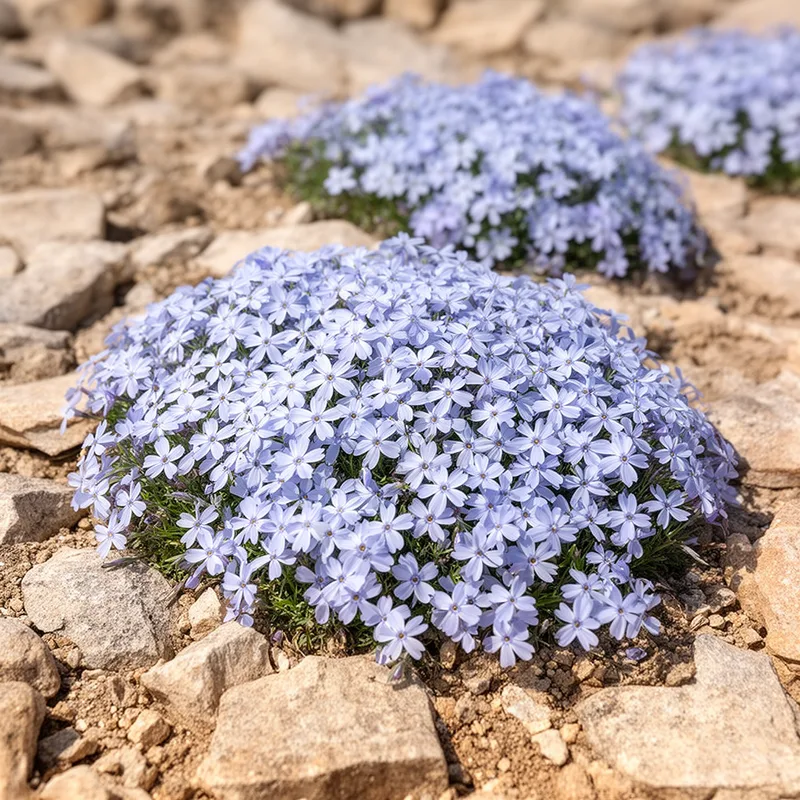
Phlox bifida
- noun
- /flɒks ˈbɪfɪdə/
- Specialized
- We spotted several patches of Phlox bifida growing naturally along the hiking trail.
Examples
-
The rocky garden was covered in Phlox bifida, adding a splash of blue in spring.
-
Gardeners value Phlox bifida because it thrives in dry, rocky soil.
-
Look at the Phlox bifida!
-
The garden was filled with beautiful Phlox bifida.
-
Gardeners value Phlox bifida because it thrives in dry, rocky soil.
-
The rocky garden was covered in Phlox bifida, adding a splash of blue in spring.
-
We spotted several patches of Phlox bifida growing naturally along the hiking trail.
Synonyms

A low plant with small flowers that forms mats on rocky ground
A low plant that forms a mat on rocky ground with small pink flowers
A low plant with small star-shaped flowers that grows in rocky places
Surface Forms
Morphology
phlox + bifida
The first element 'Phlox' clearly identifies a plant genus, so a learner who knows that would recognise this as a type of plant; however 'bifida' is a Latin species epithet (and is not a common English word here), so its descriptive contribution is obscure to B1 learners and not present in the provided dictionary entry. As a result the phrase partly signals category (a phlox) but does not transparently convey the specific meaning or appearance without specialized or Latin knowledge.
Etymology
Phlox bifida may come from Greek and Latin words: Phlox means 'flame' and bifida means 'split in two'. This gives a picture you can remember—the flowers can look like little flames or have petals split into two parts, so the name describes the plant today.

