
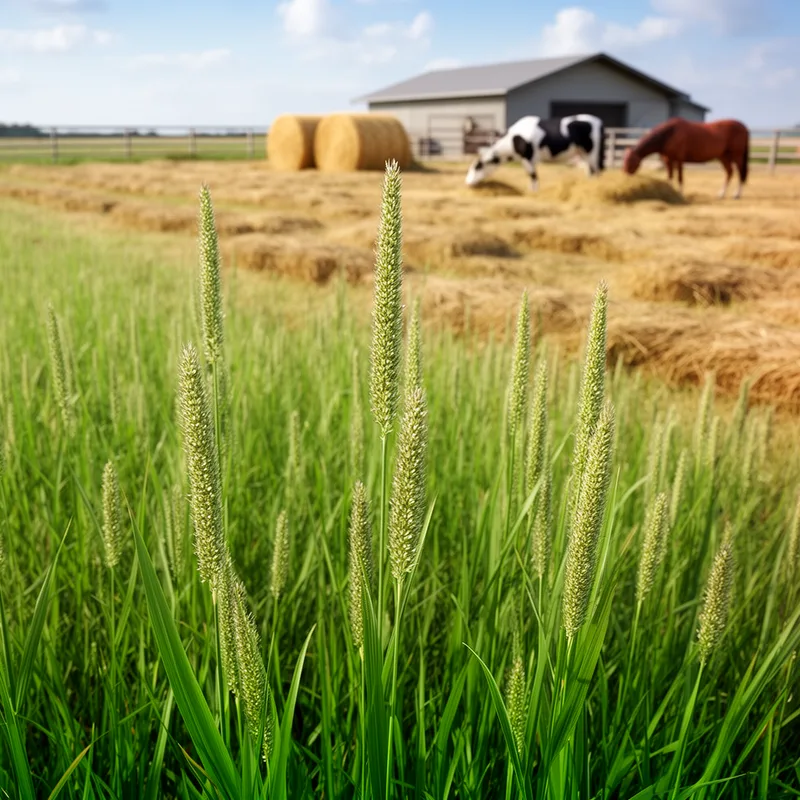
Phleum pratense


 1
8.9
- noun
- Specialized
- The farmer planted several acres of Phleum pratense to provide feed for his livestock.
Examples
-
Farmers in Wisconsin often grow Phleum pratense for their cattle.
-
The Phleum pratense fields were lush and green this summer.
-
Phleum pratense is often used as a primary hay crop in regions with cool climates.
-
In botanical studies, Phleum pratense is recognized for its resilience and nutritional value.
-
Phleum pratense is a popular choice for livestock feed due to its nutrient-rich properties.
-
Many farmers rely on Phleum pratense to ensure their cows have quality hay during the winter.
-
During the growing season, Phleum pratense flourishes in the northern United States as a vital agricultural crop.
Synonyms
 1
7.5
A grass with long seed heads grown for hay to feed animals
A tall plant with long round seed spikes grown for hay to feed animals
Surface Forms
Morphology
Phleum + pratense
This is a Latin binomial (taxonomic) name: knowing 'Phleum' as a type of grass would allow a learner to infer that the phrase names a grass, but the specific epithet 'pratense' is obscure in ordinary English and the full, culture-specific meaning (timothy grass grown for hay) is specialized. As a technical species name it is only partly predictable from its parts, offering limited compositional transparency to a B1 learner.
Etymology
Phleum pratense comes from two parts, Phleum and pratense, and paints a simple picture of the plant. The grass has long, round flower spikes like small brushes in the field, so the name helps you remember it is grown for 'hay' to feed farm animals.