
Pheidole


 1
9.9
- proper noun
- Specialized
- The late ecologist Stephen Risch and phytochemist Fred Rickson found that, unlike other ant plants, which produce ant food even after the ant colonies are removed, Piper ant plants manufacture food bodies only when Pheidole ants are in residence.
- Pheidole ants
Examples
-
The Pheidole genus includes remarkable species known for their specialized castes of worker ants.
-
In most cases, a Pheidole worker ant discovered the egg within an hour of its placement, picked it up in its mandibles, and walked away with it.
Academic text (1993) -
Slow-moving Pheidole, then, was in its own way disrupting some potential herbivores.
Academic text (1993) -
Perhaps the Piper evolved the capacity to halt food production in the absence of Pheidole either to conserve energy or to favor their particular partner ant species.
Academic text (1993) -
Rather, the structures appear in older instars of several disparate myrmicine genera like Pheidole, Cephalotes, Crematogaster, Strumigenys, and Temnothorax, among others.
Blog text (12) -
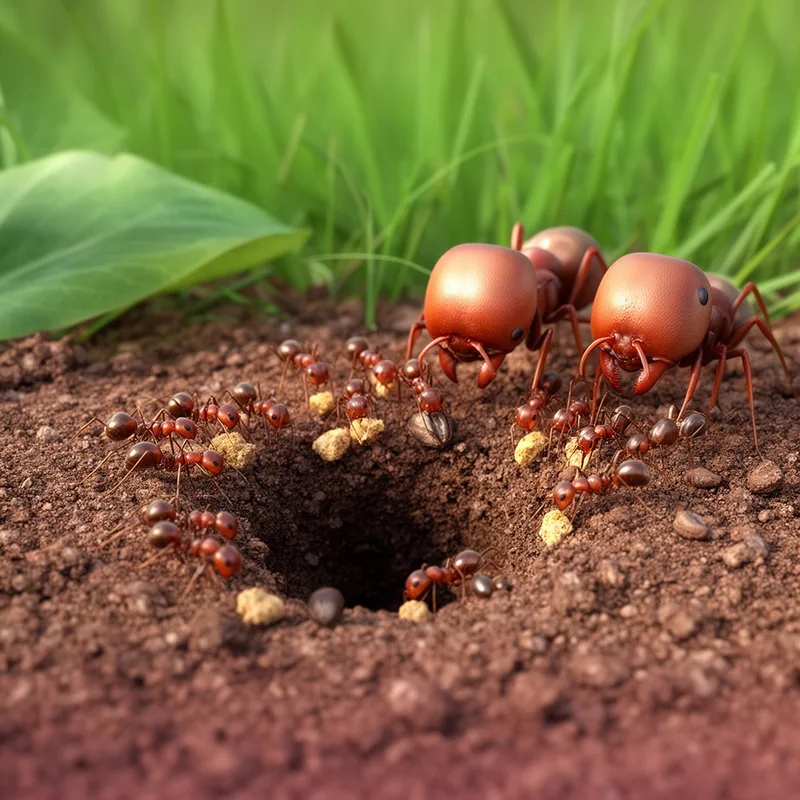
Researchers observed how a Pheidole worker ant foraged for food, showcasing its role within the colony.
-
In tropical ecosystems, Pheidole ants contribute significantly to soil aeration and nutrient cycling.
Surface Forms
Etymology
The word Pheidole is a Latin-style scientific name formed from an old Greek name and used for this group of ants. A helpful way to remember Pheidole is to picture a colony with two clear types of workers, especially the big-headed 'soldiers', because the genus is known for that division.