

Pelargonium graveolens
- noun
- Specialized
- The essential oil of Pelargonium graveolens is prized for its rose-like scent in perfumery.
Examples
-
Gardeners often cultivate Pelargonium graveolens for its aromatic leaves and attractive flowers.
-
Research shows that Pelargonium graveolens can be used as a natural mosquito repellent.
-
The Pelargonium graveolens has a delightful scent.
-
I love the smell of Pelargonium graveolens in my garden.
-
Many people grow Pelargonium graveolens in their gardens because of its fragrant leaves and pretty pink flowers.
-
The essential oil from Pelargonium graveolens is commonly used in cosmetics for its pleasant aroma.
-
You can often find Pelargonium graveolens in herbal shops due to its aromatic properties and therapeutic uses.
Synonyms
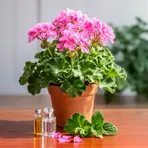
A plant with pink flowers and scented leaves used for perfume

A plant with divided leaves and pink flowers that smell sweet
Surface Forms
Morphology
Pelargonium + graveolens
This is a Latin binomial: knowing 'Pelargonium' tells a learner it is a member of a fragrant flowering-plant genus, so they can infer it is a kind of pelargonium. The species epithet 'graveolens' is a Latin form not listed here and is not transparently understandable to a B1 learner, so the specific sense (rose geranium / strongly scented leaves) is not fully predictable.
Etymology
Pelargonium graveolens gets its name from older words: Pelargonium comes from a word for a 'stork' because the plant's dry seed pods look like a stork's bill, and graveolens means 'strong-smelling', which points to its 'rose-like' scent. So the name helps you remember both the seed shape and the plant's strong perfume.

