
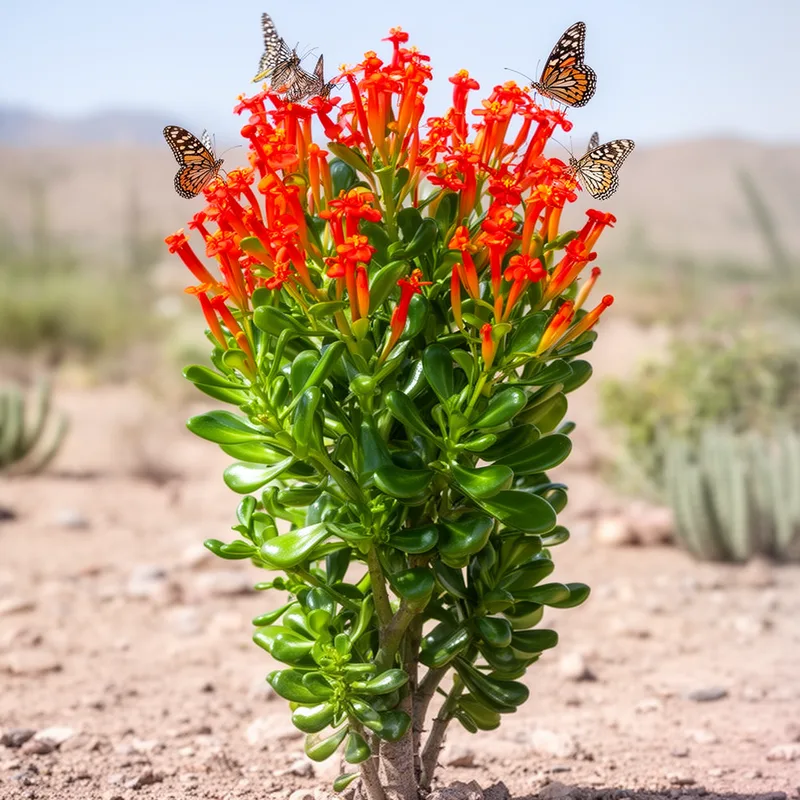
Pedilanthus pavonis
- noun
- Specialized
- In arid landscapes, Pedilanthus pavonis is valued for its drought resistance and ornamental appeal.
Examples
-
The Pedilanthus pavonis in our garden attracts many butterflies with its striking flowers.
-
The Pedilanthus pavonis thrives in dry conditions, making it a popular choice for xeriscaping.
-
Botanists study Pedilanthus pavonis for its potential medicinal properties and unique waxy coating.
-
The Pedilanthus pavonis is known for its unique waxy leaves.
-
Have you seen a Pedilanthus pavonis plant before?
-
Many gardeners choose Pedilanthus pavonis for its attractive waxy leaves and vibrant flowers.
-
Researchers are examining Pedilanthus pavonis to understand its ecological impact in its native habitat.
Surface Forms
Morphology
Pedilanthus + pavonis
This is a Latin binomial (genus + specific epithet), so a learner who recognises 'Pedilanthus' as a genus of tropical shrubs can infer that 'Pedilanthus pavonis' names a species within that genus. However, the specific epithet 'pavonis' carries no transparent, everyday meaning to a B1 learner and the detailed properties (wax-coated leaves, native range) are not derivable from the parts, so the expression is only partially transparent.
Etymology
The plant name Pedilanthus pavonis comes from old Greek and Latin words. Pedilanthus means 'slipper flower' because the bloom looks like a small slipper and pavonis means 'of the peacock', referring to its bright, showy colours, so the name helps you picture this waxy shrub with slipper-shaped, peacock-like flowers.

