
Pauli exclusion principle


 1
9.9
1
9.9
- noun
- /ˈpaʊli ɪkˈskluːʒən ˈprɪnsəpəl/
- Specialized
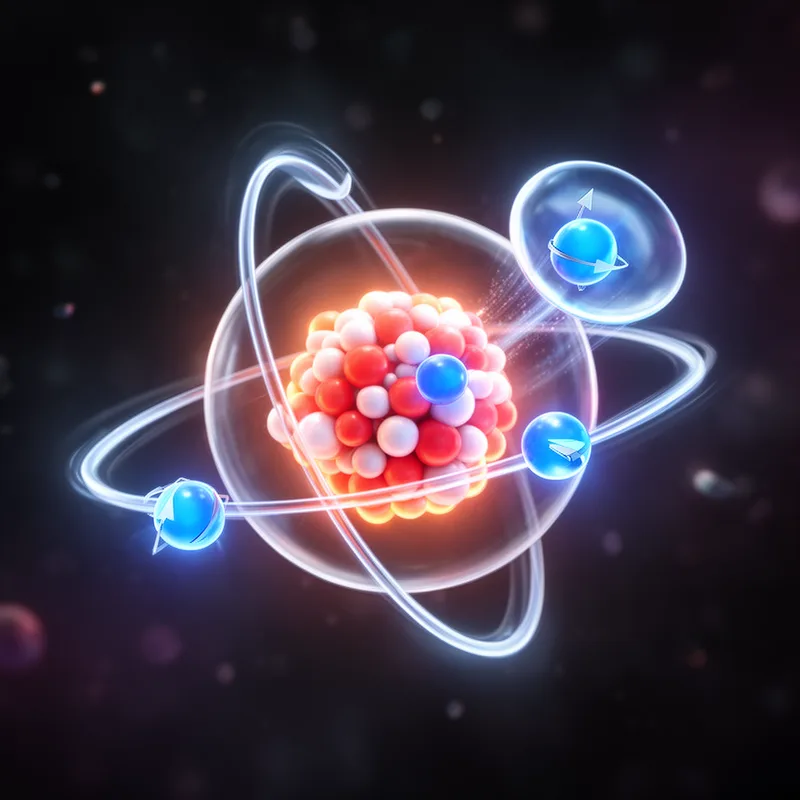
- The Pauli exclusion principle states that no two identical electrons in an atom can occupy the same quantum state simultaneously.
Examples
-
According to the Pauli exclusion principle, fermions such as protons cannot be in the same state at the same time.
-
Question Yeah, on the two state example, is the Pauli exclusion principle of locally communicated?
-
The other half is the Pauli exclusion principle, which requires the presence of actual, physical electrons to push other electrons around, not just some arbitrary source of electric charge.
Blog text (14) -
Thanks to the Pauli exclusion principle and Zeeman splitting, up spins and down spins respond differently to the same electric field.
Academic text (2006) -
In quantum mechanics, the Pauli exclusion principle explains why electrons fill available energy levels in an atom.
Synonyms
 1
9.9
1
9.9
A rule that no two identical particles, such as electrons, can be in the same state at the same time
Surface Forms
Morphology
The words 'exclusion' and 'principle' transparently signal 'a rule about excluding', so a learner can guess this is a named rule that excludes something; however 'Pauli' is a proper name and the precise content (about identical fermions and quantum states) is specialized and not derivable from the parts. A B1 learner would likely infer it is a named scientific rule but would not be able to recover the specific quantum-mechanical meaning, so the expression is only partially transparent.
Etymology
Pauli exclusion principle is named after physicist Wolfgang Pauli, but a handy picture is a room of chairs where each electron must have its own seat and cannot share it with another. That's why no two electrons can be in the 'same state' and so they spread into different energy levels in an atom.