
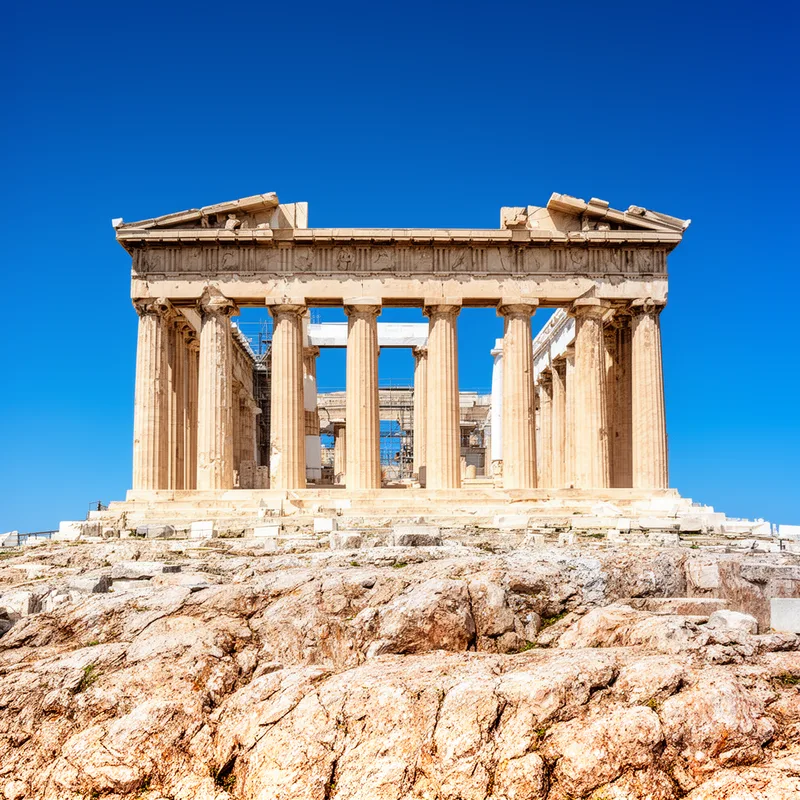
Parthenon
 8
7.0

- proper noun
- /ˈpɑrθəˌnɒn/
- It's also about showcasing Greek demands for the return of the Parthenon Marbles.
- Parthenon frieze
- built the Parthenon
Loading YouTube…
Watch on YouTubeSo he says, boy, we sure had a good time at the Parthenon this morning, didn't we, Hill?
- So he says, boy, we sure had a good time at the Parthenon this morning, didn't we, Hill?
Examples
-
Standard histories of modern architecture obligingly place images of the Parthenon ruin alongside images of the restored villa.
Academic text (2000) -
One of the most famous buildings to use columns is the Parthenon in Greece.
-
One of the most famous buildings to use columns is the Parthenon in Greece.
Academic text (2008) -
"The Parthenon had stood for 2,400 years.
-
A long history of polemical reproductions of the Parthenon is an intimate part of the evolving concepts of art and history.
Academic text (2000) -
Pausanias says the Arcadians believe the temple was designed by Ictinus, who built the Parthenon in Athens.
Academic text (1998) -
Immense marble blocks for the Parthenon's pediment have just arrived from quarries at Mount Pentelicon.
-
Completed under Pericles, the Parthenon was dedicated to Athena in 438 BC.
-
Immense marble blocks for the Parthenon's pediment have just arrived from quarries at Mount Pentelicon.
Surface Forms
Etymology
The word Parthenon comes from the Greek word parthenos meaning 'virgin' and refers to Athena Parthenos, 'Athena the virgin'. So the name points to the temple of that goddess, which is why the Parthenon is the famous main temple on the Acropolis.