
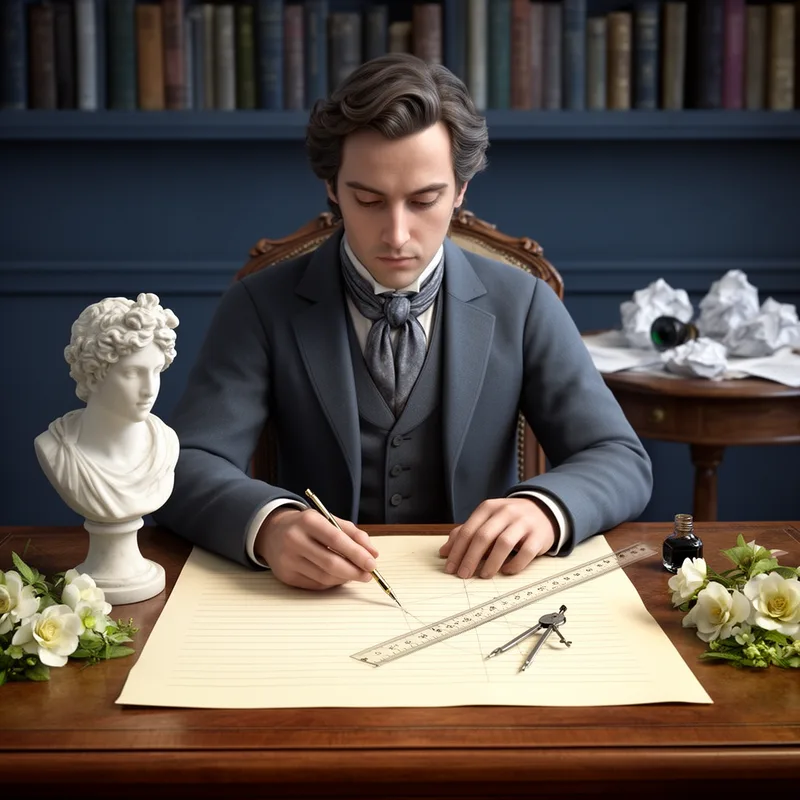
Parnassianism


 1
9.9
- noun
- /pɑrˈnæsɪənˌɪzəm/
- Literature
- Many poets associated with Parnassianism believed that poetry should be appreciated for its beauty alone.
Examples
-
The Parnassianism movement sought to separate art from any moral or political agenda.
-
Indeed, as the literary historian James K. Robinson points out, in the last third of the century, "English Parnassianism" and the "vogue of Villon translation" characterized English verse culture.
Academic text (2017) -
Parnassianism emphasizes the importance of Parnassianism in formal precision and objective expression in poetry.
How Formal

Surface Forms
Morphology
Parnassianism = Parnassian (semi-transparent) = Parnassus + ian + ism
The formation from the adjective 'Parnassian' plus the productive suffix '-ism' clearly denotes a movement or doctrine.
Etymology
Parnassianism comes from Mount Parnassus, said to be the home of the Muses, the 'goddesses of poetry and art', so the name points to poetry. 19th-century poets used Parnassianism for a style that prized careful form and skill, so the word now means a movement that values craft and precise form over strong feeling.