
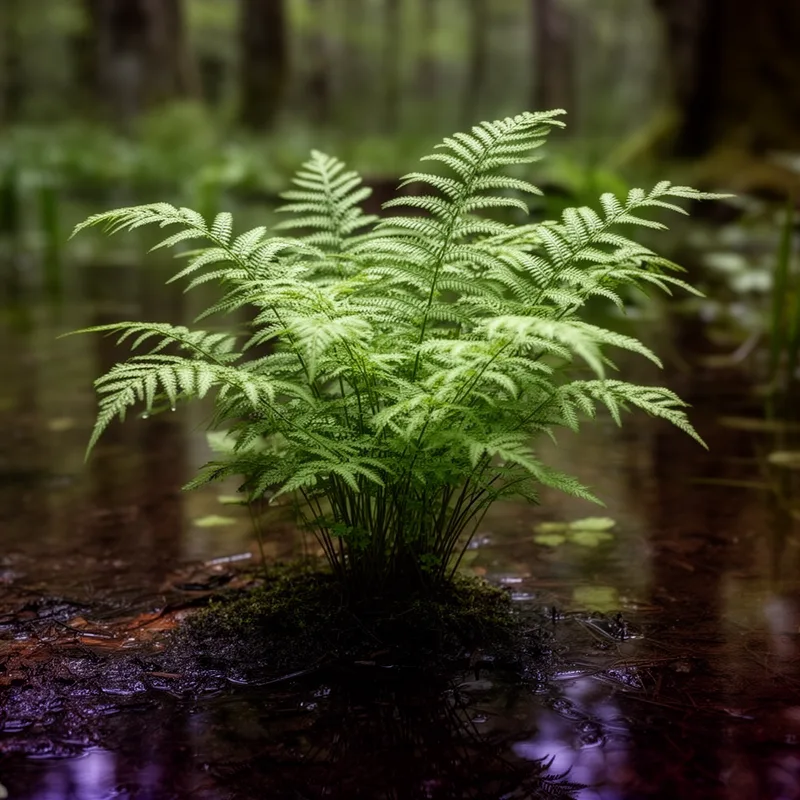
Parathelypteris simulata
- noun
- Specialized
- The delicate fronds of Parathelypteris simulata make it a distinctive presence in shaded forest understories.
Examples
-
Parathelypteris simulata thrives in moist woods and wetlands across the eastern United States.
-
Botanists have reclassified Parathelypteris simulata several times due to changes in fern taxonomy.
-
The Parathelypteris simulata thrives in moist, shaded areas.
-
I found a Parathelypteris simulata while hiking in Virginia.
-
Parathelypteris simulata produces fine, feathery leaves that are a hallmark of its beauty in the forest.
-
Parathelypteris simulata often flourishes in the damp, rich soil found in the understory of deciduous forests.
-
Parathelypteris simulata is particularly valued for its ornamental qualities in native plant gardens.
Synonyms
A delicate feathery fern that grows in eastern United States woodlands

A delicate fern with feathery leaves that grows in the eastern United States
Surface Forms
Morphology
Parathelypteris + simulata
This is a scientific Latin binomial functioning as a proper name for a species rather than a compositional English phrase. Knowing 'Parathelypteris' (a genus of ferns) does not allow a B1 learner to infer the specific species identity or descriptive senses—especially since 'simulata' is undefined here—so the overall meaning cannot be derived from the parts.
Etymology
Parathelypteris simulata comes from how this fern looks. The parts para- (meaning 'near'), Thelypteris (the name of a similar fern), and simulata (meaning 'similar' or 'copied') together say 'a fern that looks like Thelypteris', which explains the species name.

