
PPLO
- noun
- Archaic
- Treatment of PPLO infections is challenging due to their resistance to many common antibiotics.
Examples
-
The presence of PPLO in the patient's respiratory tract was confirmed by laboratory tests.
-
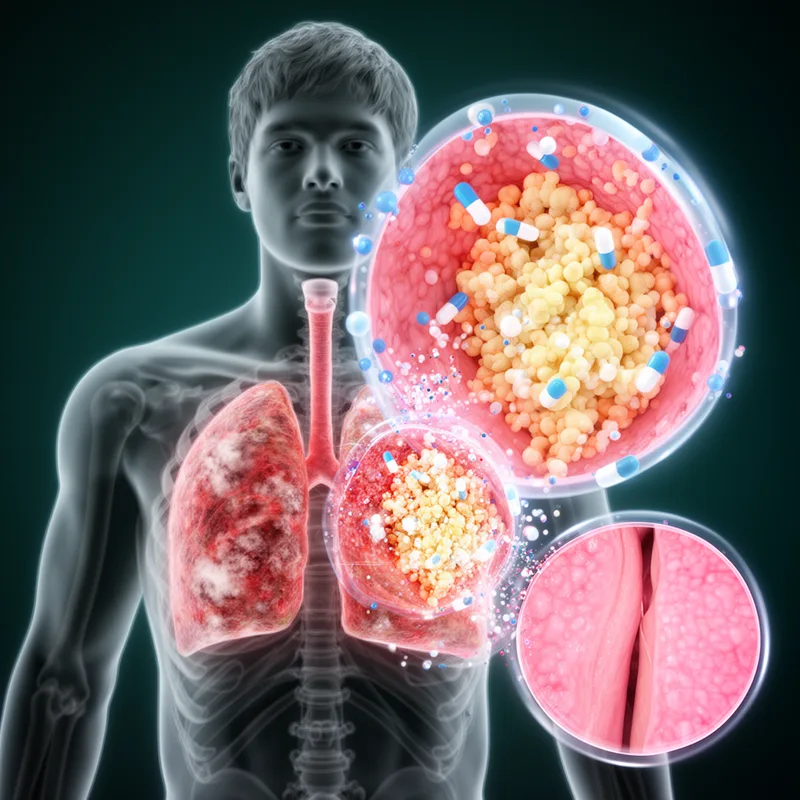
The PPLO bacteria are known to cause atypical pneumonia.
-
Doctors often encounter PPLO when diagnosing cases of atypical pneumonia in young adults.
-
Many researchers study PPLOs to understand their antibiotic resistance.
-
Doctors often encounter PPLO when diagnosing cases of atypical pneumonia in young adults.
-
The presence of PPLO in the patient's respiratory tract was confirmed by laboratory tests.
-
Treatment of PPLO infections is challenging due to their resistance to many common antibiotics.
Synonyms

 2
5.3
2
5.3

A lung infection with high fever and cough that often affects children and young adults

A type of bacteria that resists antibiotics and causes a lung infection

A lung infection caused by mycoplasma bacteria that causes high fever and a dry cough in children and young adults

A lung infection in children and young adults that causes high fever and cough
Surface Forms
Etymology
PPLO is a short name from the phrase pleuro-pneumonia-like organisms, because these tiny germs were first linked to 'pneumonia' and so the name meant 'pneumonia-like organisms'. That's why PPLO now refers to a group of small, often antibiotic-resistant germs called mycoplasmas that can cause an unusual, 'atypical' form of pneumonia.