
PCM


 1
7.1
- noun
- /piː siː ɛm/
- Specialized
- The recording provided for analysis was single-channel PCM with a sampling frequency of 8 kHz and 16-bit quantization.
Examples
-
It could open and save audio in uncompressed PCM format (.wav), including CD quality audio.
Academic text (2008) -
Linear PCM audio
Blog text (4) -
And but PCM had a transformative impact on telemetry.
-
However, this apparent weakness is actually one of PCM's greatest strengths.
-
The 744T reads uncompressed PCM audio at 16 or 24 bits, with sample rates between 32 and 192 kHz.
Blog text (13) -
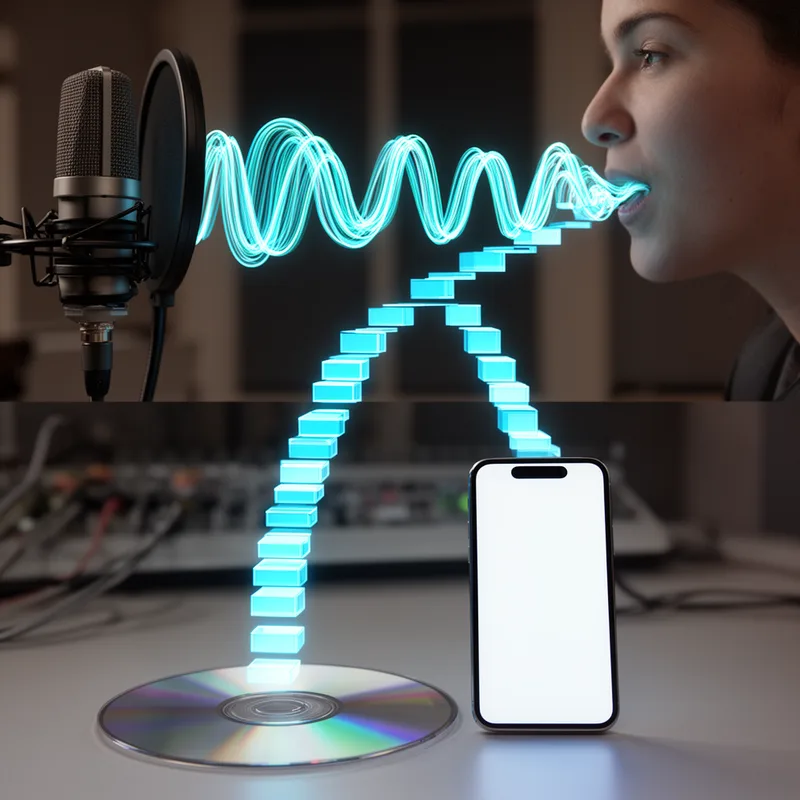
PCM is a method of PCM converting analog signals into digital form by sampling, commonly used in audio recordings.
-
The audio quality from PCM recordings is often better than that of compressed formats.
-
In telecommunications, PCM allows for the efficient transmission of voice signals over digital networks.
Synonyms
 5
4.6
To turn paper, photos, or sounds into computer files
Surface Forms
Morphology
PCM = P + C + M
PCM is an initialism for 'pulse-code modulation' and is not analyzable into meaningful English morphemes for learners, so its letters do not transparently convey the word's meaning.
Etymology
PCM comes from the phrase pulse-code modulation. Think of it like taking a pulse meaning 'heartbeat', turning it into a code meaning 'numbers', and modulation meaning 'change to the signal', so PCM is a method to turn sound into numbers to send or store clearly.