
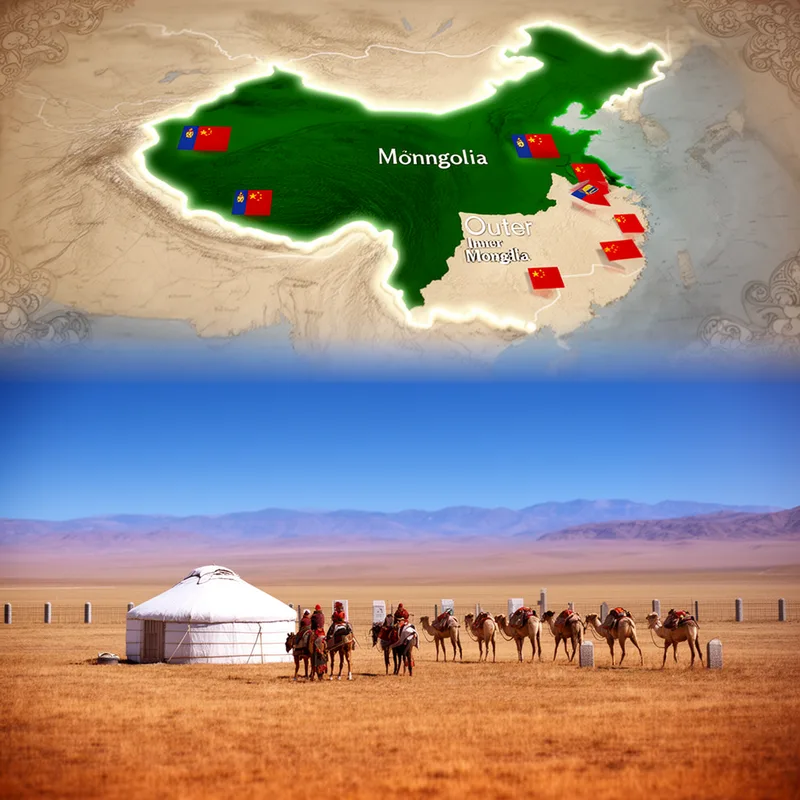
Outer Mongolia
- proper noun
- /ˈaʊtər mɒŋˈɡoʊliə/
- Archaic
- During the Qing dynasty, Outer Mongolia was under Chinese administration, but it declared independence in 1911.
Examples
-
The history of Outer Mongolia is shaped by its unique nomadic culture and strategic location.
-
Many travelers cross the Gobi Desert when journeying from Outer Mongolia into China.
-
Outer Mongolia is beautiful.
-
I want to visit Outer Mongolia!
-
In the late 13th century, travelers from Europe were intrigued by Outer Mongolia and its vast steppes.
-
Outer Mongolia was once part of the Mongol Empire, which stretched across Asia.
-
During my studies, I learned about the rich history and traditions of Outer Mongolia.
Synonyms
 28
3.1
28
3.1

A country in northern Asia between Russia and China
Surface Forms
Morphology
The meaning is directly built from 'outer' (external/outside) + 'Mongolia' (the country/region), so a B1 learner who knows both words will infer it refers to the part of Mongolia outside an inner area. The precise historical/political nuance (contrast with Inner Mongolia) may need background knowledge, but the compositional logic is straightforward and cross‑linguistically transparent.
Etymology
Outer Mongolia gets its name from old maps and rulers who called lands farther from their capital outer and lands closer inner. So Outer Mongolia came to mean the region 'now the country of Mongolia', as opposed to 'Inner Mongolia' which is part of China.