

Otus
 1
9.9
1
9.9

- noun
- Specialized
- The Otus genus includes several different species of scops owls, known for their distinctive calls.
- Clusters of OTUs
- taxonomic units (OTUs)
- abundance of OTUs
Examples
-
The Otus owls are known for their large eyes and ability to rotate their heads almost completely around.
-
Researchers identified various species within the Otus genus during their study of owl habitats.
-
At the genus level, Prevotella, Neisseria, and two specific OTUs are found as potential biomarkers for ADHD.
Academic text (2018) -
The sequences were binned into operational taxonomic units (OTUs) with 97% similarity.
Academic text (2018) -
Operational taxonomic units (OTUs) were generated using the cluster command. Representative sequences for each OTU were generated using the get.oturep command.
Academic text (2018) -
Like the gut microbiota of workers, that of queens is taxonomically simple and represented by only 7-12 conspicuous OTUs dependent on niche.
Academic text (2018) -
The MANOVA and multivariate analysis of covariance (MANCOVA) were performed on CLR-transformed data with OTUs 1-9 as dependent variables.
Academic text (2018) -
Lines connecting particular OTUs depict positive correlations (correlation coefficient r = 0.6) between individual OTUs. Clusters of OTUs are discriminated by different colors.
Academic text (2014) -
As a confirmation of the clustering and separation produced by PCA, we performed ANOSIM on the raw amplicon reads from the top 37 OTUs to test for microbiota similarity by age and source.
Academic text (2018)
Synonyms

A group of small owls like the Scops owl that are active at night
Compounds
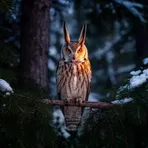
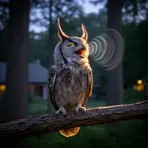
- Specialized
A small North American owl with hornlike feather tufts and a high trembling whistle
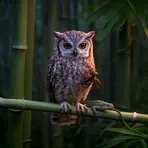
Surface Forms
Etymology
Otus comes from an old Greek word meaning 'eared', from ous which means 'ear'. That's why the name fits the scops owls in the genus Otus because many have small ear tufts and very good hearing.