
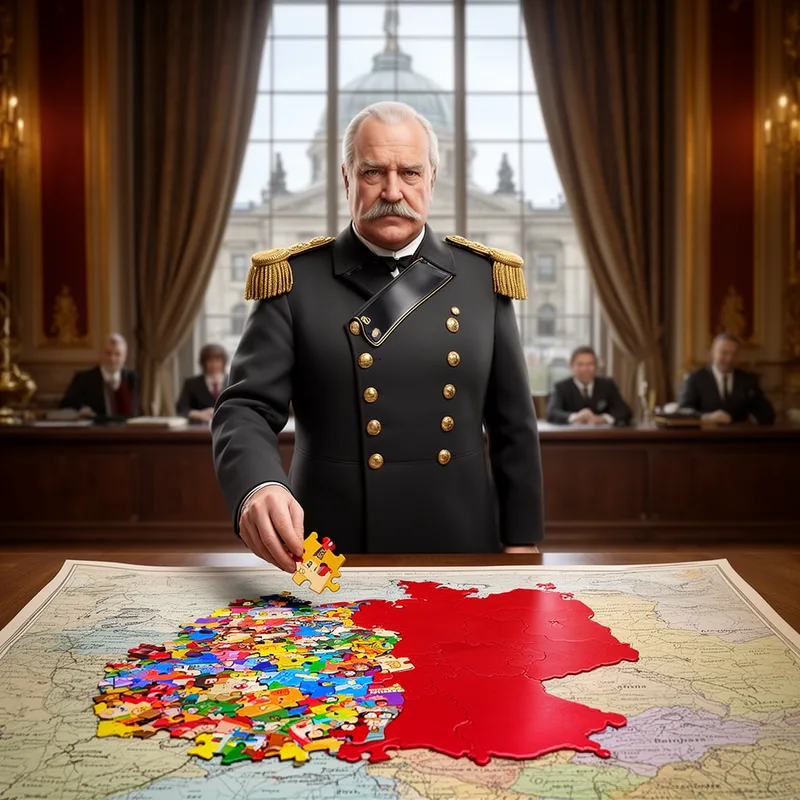
Otto von Bismarck
- proper noun
 :
Otto von Bismarck
:
Otto von Bismarck
- Otto von Bismarck was instrumental in the unification of Germany, serving as its first Chancellor from 1867 to 1890.
Examples
-
The unification of Germany would not have been possible without Otto von Bismarck's diplomatic skills.
-
The policies of Otto von Bismarck shaped modern Germany.
-
Otto von Bismarck played a crucial role in shaping modern Germany through his policies and leadership.
-
Historians often debate the long-term effects of Otto von Bismarck's domestic and foreign policies.
-
Did Otto von Bismarck really say that?
-
Many consider Otto von Bismarck the architect of modern Germany due to his strategic alliances and diplomacy.
-
Otto von Bismarck's leadership during the 19th century significantly influenced European politics.
Synonyms

 9
7.2
9
7.2

A 19th century German leader who united Germany and became its first chancellor

A German leader who united Germany and became its first chancellor

A German leader who united many states to form Germany and became its first chancellor

A name for Otto von Bismarck, the German leader who united Germany in the 1800s
Surface Forms
Morphology
Otto + von + Bismarck
This is a proper name referring to a specific historical person; the biographical meaning (German statesman, first Chancellor, led unification) cannot be derived from the constituent words. While 'von' may suggest German origin or nobility, and 'Bismarck' is a surname, knowing the parts does not allow a B1 learner to infer the referent's identity or historical role, so the expression is idiomatically referential and not compositional.
Etymology
Otto von Bismarck was a 19th-century German leader who joined many small German states into one country. He became Germany's first chancellor by using clever deals, careful talks and sometimes war, so his name now stands for strong, practical politics.