

Osmerus eperlanus
- noun
- Specialized
- Scientists studied the migration patterns of Osmerus eperlanus in European rivers.
Examples
-
The Osmerus eperlanus population in the Baltic Sea has declined due to overfishing.
-
The Osmerus eperlanus is commonly found in the North Sea.
-
Fishing for Osmerus eperlanus is a traditional activity in some coastal communities.
-
Have you ever tasted Osmerus eperlanus?
-
Fishing for Osmerus eperlanus is a traditional activity in some coastal communities.
-
Scientists studied the migration patterns of Osmerus eperlanus in European rivers.
-
The Osmerus eperlanus population in the Baltic Sea has declined due to overfishing.
Synonyms
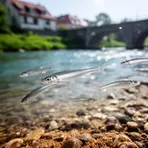
A small thin silver fish found in European rivers and coasts with a mild taste
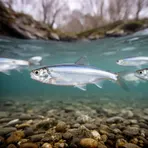
A small silvery fish found in the sea and rivers of northern Europe
Surface Forms
Morphology
Osmerus + eperlanus
This is a Latin binomial name: knowing 'Osmerus' as a taxonomic genus allows a learner to infer the phrase refers to a kind of smelt, but the species epithet 'eperlanus' has no lexical meaning and the full common sense ('European smelt, coastal/rivers') is not recoverable without domain knowledge of taxonomic naming. Because part of the meaning (a type of fish) is derivable from the genus but the specific sense and habitat require extra knowledge, the expression is partially but not fully transparent to a B1 learner.
Etymology
Osmerus eperlanus may come from old words that point to the fish's smell and its everyday name. The part Osmerus may come from a word for 'smell' because these small fish give off a strong scent, and eperlanus comes from the French 'éperlan', the everyday name for the smelt, so the name simply labels the European smelt.

