
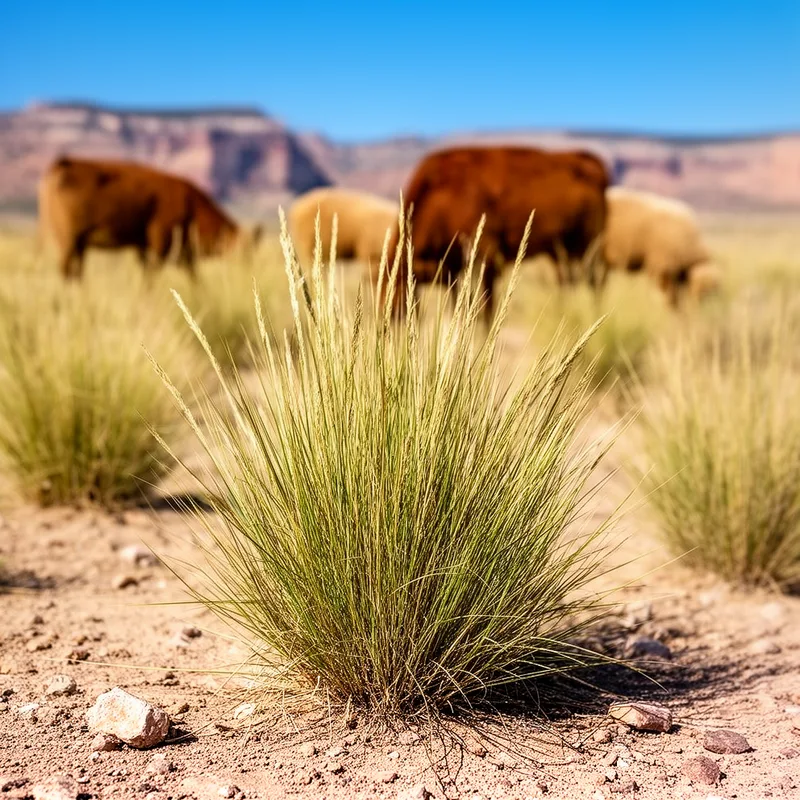
Oryzopsis hymenoides
- noun
- Specialized
- Ranchers appreciate Oryzopsis hymenoides for its drought tolerance and nutritional value as livestock forage.
Examples
-
Oryzopsis hymenoides is often planted to restore rangelands in arid regions of the western United States.
-
Farmers often plant Oryzopsis hymenoides for its drought resistance.
-
She identified the clump of Oryzopsis hymenoides growing near the edge of the canyon.
-
The Oryzopsis hymenoides plant grows up to three feet tall.
-
Oryzopsis hymenoides is highly valued by ranchers as a nutritious forage grass for their livestock.
-
Many conservationists recommend Oryzopsis hymenoides to improve soil health in dry ecosystems.
-
Due to its ability to thrive in arid conditions, Oryzopsis hymenoides is essential for sustainable grazing practices.
Synonyms

A grass that animals eat in dry high places and plains of western North America and northern Mexico

A tough grass that grows on dry land and feeds cattle

A grass that grows on dry plains and feeds animals like cattle
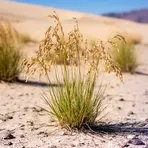
A grass with seeds like small grains that grows in dry places in North America

A group of grass plants like rice that grow in North America and Asia
Surface Forms
Morphology
Oryzopsis + hymenoides
The genus name 'Oryzopsis' explicitly identifies the referent as a grass, so a learner who knows that constituent would infer this is a type of grass (i.e. a taxonomic name). However, the species epithet 'hymenoides' is not a familiar English word and does not convey the specific attributes (perennial, habitat, forage value), so the full, detailed meaning is not predictable without prior exposure.
Etymology
Oryzopsis hymenoides likely gets its name from the tiny seeds that look like rice. Because people once ate its small, pale seeds, the name points to 'rice' and this image helps you remember it is a grass of dry land that was used for food and animal feed.

