
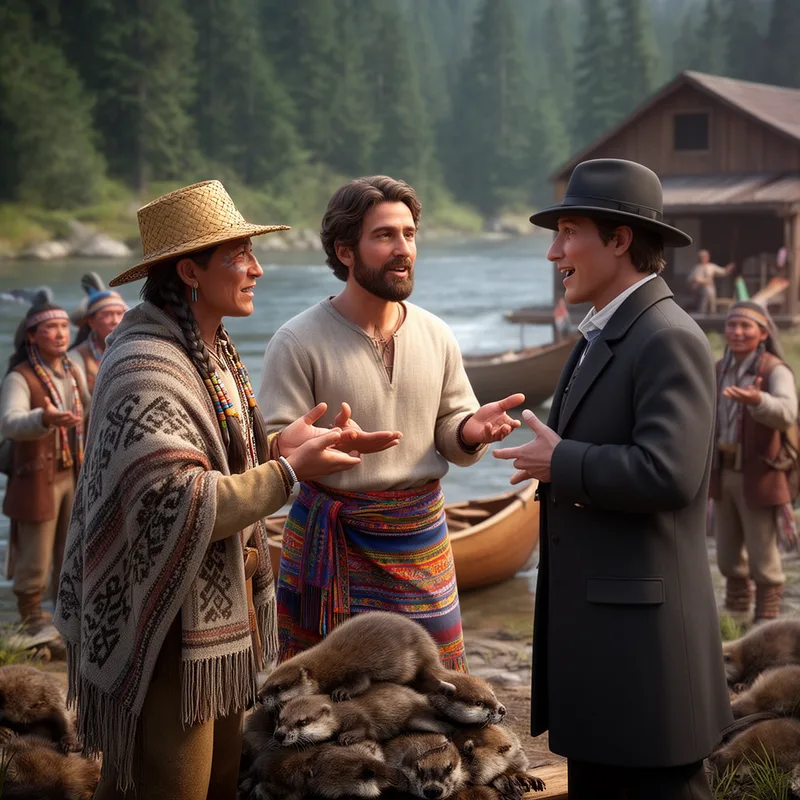
Oregon Jargon
- noun
- /ˈɔrɪɡən ˈdʒɑrɡən/
- Literature
- During the 19th century, traders often communicated using Oregon Jargon along the Columbia River.
Examples
-
Today, linguists study Oregon Jargon to understand multicultural interactions in early Pacific Northwest history.
-
The vocabulary of Oregon Jargon included words from indigenous, French, and English sources.
-
The Oregon Jargon was widely spoken among traders.
-
Many historians study Oregon Jargon for its unique vocabulary.
-
During the 19th century, traders often communicated using Oregon Jargon along the Columbia River.
-
The vocabulary of Oregon Jargon included words from indigenous, French, and English sources.
-
Today, linguists study Oregon Jargon to understand multicultural interactions in early Pacific Northwest history.
Synonyms
A simple language made from native languages, French, and English used for trade in the Pacific Northwest
Surface Forms
Morphology
The compound 'Oregon Jargon' transparently signals a variety or set of specialized words associated with Oregon (Oregon + jargon), so a B1 learner would likely guess it refers to a regional way of speaking. However, the specific historical status as a pidgin blending Chinook, French, and English and its use as a lingua franca is not derivable from the constituents, so the full meaning requires prior knowledge.
Etymology
Oregon Jargon comes from a simple trade language used in the 1800s along the Columbia River, where traders and local people mixed words from Chinook, French and English to talk to each other. That's why the name refers to a mixed or 'common language' used so different groups could talk.

