
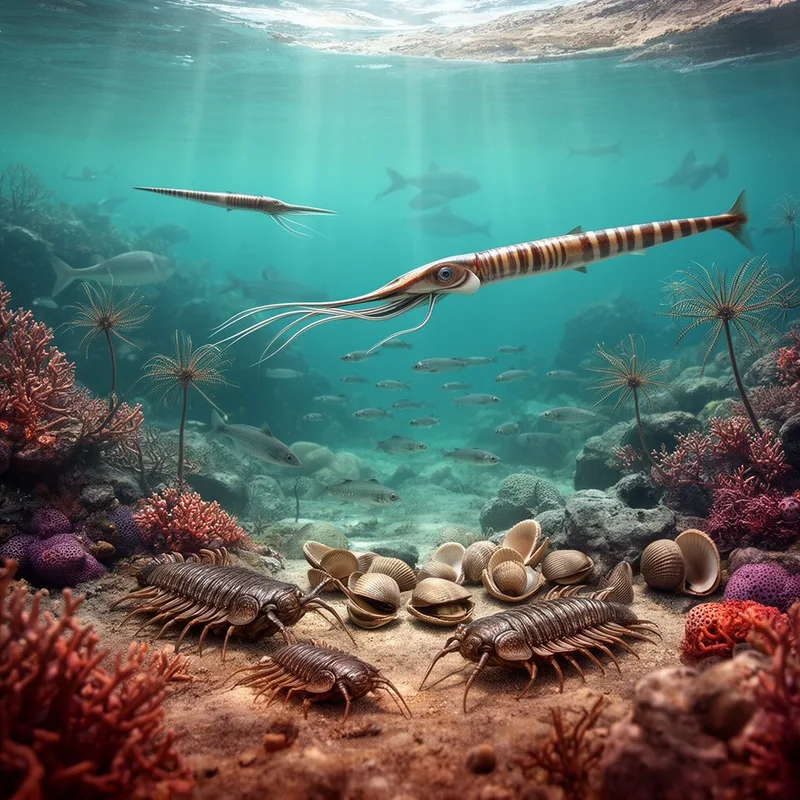
Ordovician period
- noun
- /ˌɔrdəˈvɪʃən ˈpɪrɪəd/
- Specialized
 :
período ordovícico
:
período ordovícico
- Geologists study rock layers from the Ordovician period to understand Earth's ancient environments.
Examples
-
The Ordovician period was marked by significant diversification of invertebrate animals.
-
Many fossils from the Ordovician period have been discovered in North America.
-
Fossils from the Ordovician period show an abundance of marine life forms.
-
The Ordovician period lasted from about 485 to 444 million years ago.
-
The Ordovician period was marked by a rich diversity of marine life, evident in the fossil record.
-
During the Ordovician period, many new types of organisms began to appear in the oceans.
-
Geologists study rock layers from the Ordovician period to understand ancient marine ecosystems.
Synonyms


 1
9.9
1
9.9
A time about 485 to 444 million years ago when many sea animals lived
Surface Forms
Morphology
The phrase simply names a geological time interval: 'Ordovician' is the specific name of a geological stage and 'period' denotes a measured interval, so the combined meaning is directly predictable from the parts. This follows a common naming pattern for geological eras/periods that is cross-linguistically familiar, so a B1 learner who knows the constituents would understand it.
Etymology
Ordovician period gets its name from the Ordovices, an old tribe who lived in what is now Wales. A geologist in the 1800s used their name because he found many sea fossils in those rocks, so Ordovician period today means the 'time' when many early marine animals lived.