
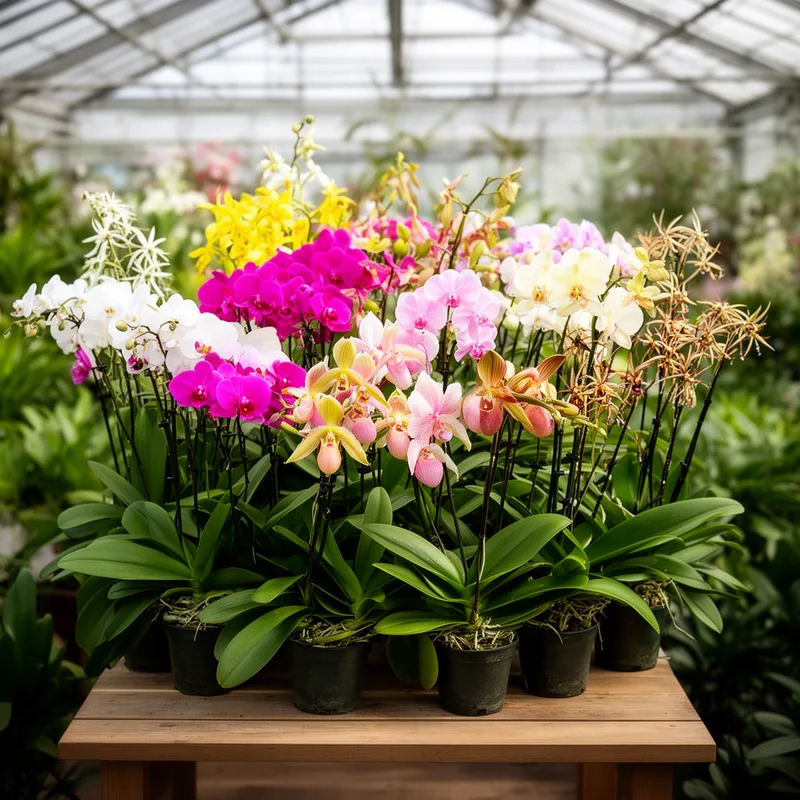
Orchidales


 1
9.9
- noun
- /ˌɔrkɪˈdeɪliz/
- Specialized
- Many horticulturists specialize in cultivating plants from the Orchidales order, particularly orchids.
Examples
-
The Orchidales order includes many exotic species.
-
The Orchidales include some of the most diverse and beautiful flowering plants in the world.
-
Botanists have studied the evolutionary relationships within Orchidales to better understand plant diversity.
-
Did you know that Orchidales are known for their unique flowers?
-
The Orchidales include many beautiful flowers, such as orchids, which are known for their unique shapes.
-
Botanists study the characteristics of Orchidales to better understand their role in the ecosystem.
-
In the classification of plants, Orchidales are recognized for their irregular flowers and distinct features.
Surface Forms
Morphology
Etymology
Orchidales comes from orchid, which in turn comes from the Greek word orchis meaning 'testicle' because early botanists thought the plant's underground parts looked like small testicles. The ending -ales marks a group or 'order' of plants, so Orchidales is the plant order that includes orchids and their relatives.