
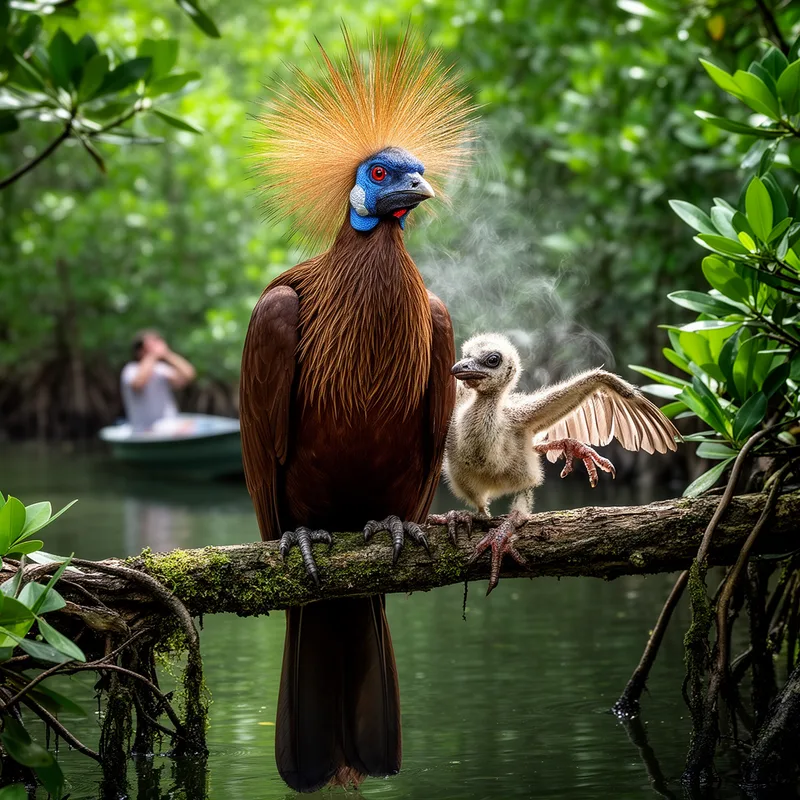
Opisthocomus hoazin
- noun
- /ˌɑːpɪsˈθoʊkəməs ˈhwɑːzɪn/
- Specialized
- Unlike any other bird, young Opisthocomus hoazin have claws on their wings to help them climb.
Examples
-
The Opisthocomus hoazin is found in swamps and mangroves along the Amazon and Orinoco rivers.
-
The Opisthocomus hoazin has a distinct odor that some find unpleasant.
-
The diet of the Opisthocomus hoazin consists mainly of leaves and vegetation.
-
The Opisthocomus hoazin is known for its unique appearance.
-
The Opisthocomus hoazin is found in swamps and mangroves along the Amazon and Orinoco rivers.
-
The diet of the Opisthocomus hoazin consists mainly of leaves and vegetation.
-
Unlike any other bird, young Opisthocomus hoazin have claws on their wings to help them climb.
Synonyms



 1
9.9
A South American bird with a crest, a strong smell, and claws on its chicks' wings

A South American crested bird with a strong smell whose chicks climb using wing claws

A South American bird with a crest and a strong bad smell whose young have claws on their wings
Surface Forms
Morphology
Opisthocomus + hoazin
This is a scientific binomial composed of a genus name (Opisthocomus) plus a species epithet (hoazin), so the phrase simply identifies a particular bird species rather than expressing an idiomatic or metaphorical meaning. Because the meaning is a straightforward taxonomic label built from its constituents (no semantic shift), a learner who knows the constituent terms would be able to understand it.
Etymology
Opisthocomus hoazin is a strange South American 'bird' known for a small crest and a strong smell. Its 'young' have claws on their wings that help them climb, and this odd picture helps explain why people remember and name this unusual bird.