

Opheodrys aestivus
- noun
- /ˈoʊfiˌoʊdrɪs ˈeɪstɪvəs/
- Specialized
- The Opheodrys aestivus is often seen resting on branches near streams or ponds.
Examples
-
Unlike many snakes, Opheodrys aestivus spends much of its time in bushes and shrubs.
-
The Opheodrys aestivus is often seen basking in the sun.
-
Researchers observed that Opheodrys aestivus is primarily active during the day.
-
Look at that Opheodrys aestivus climbing the tree!
-
The Opheodrys aestivus is commonly found in gardens, where it hunts for insects.
-
Wildlife enthusiasts often spot the Opheodrys aestivus gliding gracefully among the leaves.
-
During warm afternoons, the Opheodrys aestivus can be seen basking on tree branches.
Synonyms
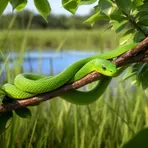
A thin bright green snake with rough scales that is harmless and lives in the southern and eastern United States
Surface Forms
Morphology
Opheodrys + aestivus
This is a Latin binomial scientific name (genus + species) functioning as a referential label rather than a compositional phrase; its meaning ('a slender bright green snake') is not derivable from knowing the constituent forms, especially since 'aestivus' is not a common English word. Scientific names are language-specific labels and are opaque to most B1 learners even if they recognise that Opheodrys is a genus of snakes.
Etymology
Opheodrys aestivus comes from older Greek and Latin words: Opheodrys points to 'snake' and aestivus means 'summer'. The name paints a picture of a thin green snake in trees during warm months, so it helps you remember this bright green, tree‑dwelling snake often seen in summer.

