
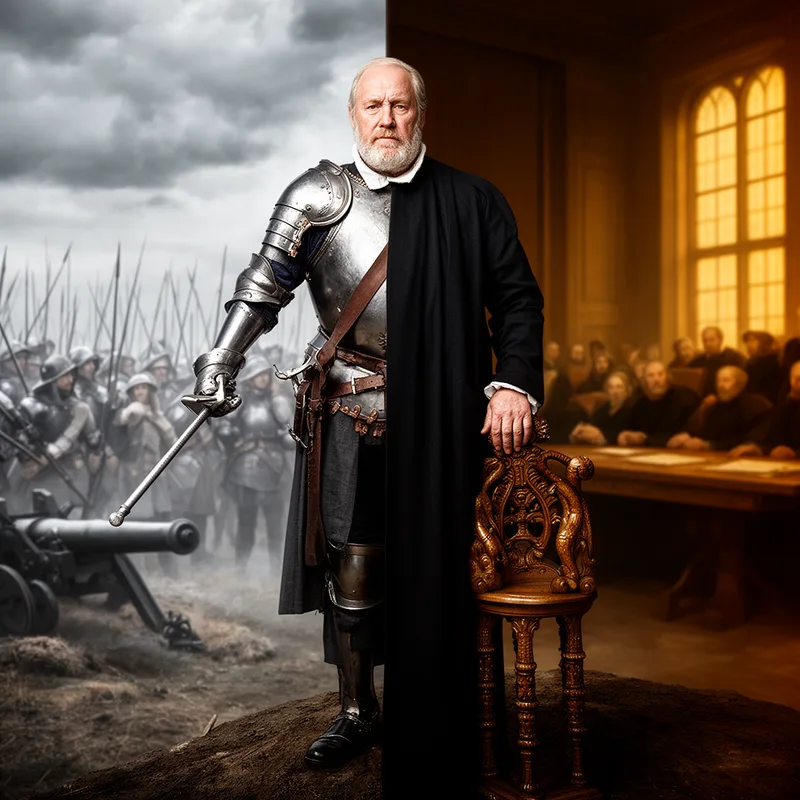
Oliver Cromwell
 2
7.5

- proper noun
- The legacy of Oliver Cromwell is still debated by historians today.
Examples
-
Many historians debate whether Oliver Cromwell's rule was that of a dictator or a hero.
-
Oliver Cromwell played a leading role in the overthrow of King Charles I during the English Civil War.
-
The legacy of Oliver Cromwell remains a subject of intense discussion in British history.
-
Many people view Oliver Cromwell as a controversial figure.
-
Oliver Cromwell led the parliamentary forces to victory at the Battle of Naseby in 1645.
-
Oliver Cromwell, as Lord Protector, implemented significant reforms in England's government.
-
Oliver Cromwell was a key figure in challenging the monarchy during the English Civil War.
Synonyms
 12
8.9
An English general and leader who led Parliament's forces in the Civil War and later ruled as head of state
Surface Forms
Morphology
Oliver + Cromwell
This is a proper name referring to a specific historical person; knowing the constituent words 'Oliver' and 'Cromwell' (both personal names) does not allow a learner to infer that the referent was a 17th‑century English general and statesman. The meaning is entirely referential and depends on world knowledge rather than compositional word meanings, so it is opaque to a B1 learner without prior exposure.
Etymology
Oliver Cromwell comes from a 1600s English general who led soldiers against King Charles I and then became 'Lord Protector', a ruler without a king. Because he used strong military power and strict rules, his name is remembered when people talk about forceful rule or a powerful leader.