
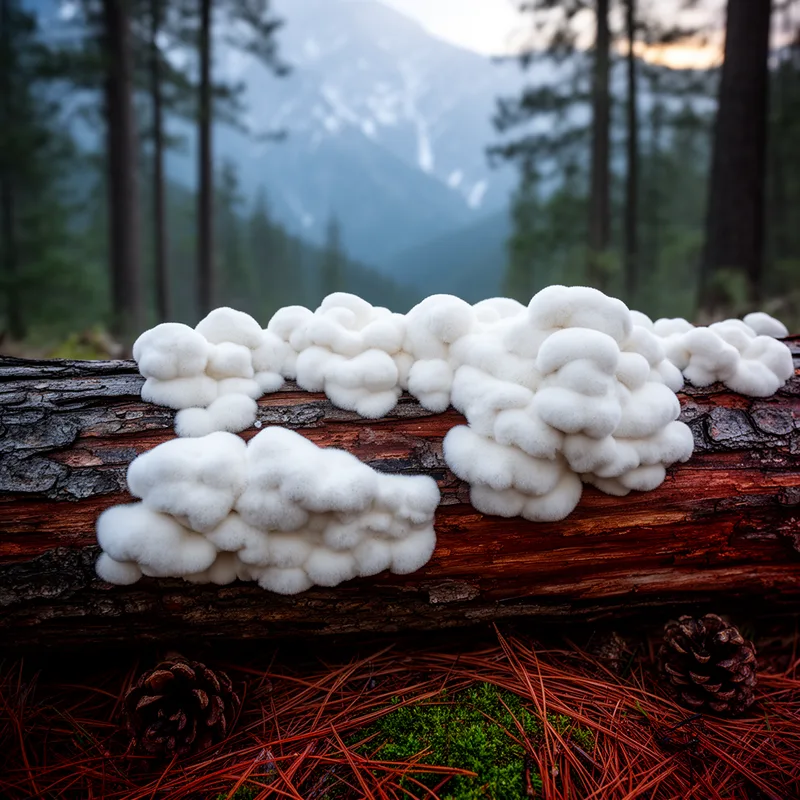
Oligoporus leucospongia
- noun
- Specialized
- The soft, whitish cap of Oligoporus leucospongia can be found on decaying pine logs in high-elevation forests.
Examples
-
The soft cap of Oligoporus leucospongia can be seen growing on fallen pine logs in alpine forests.
-
Scientists collected samples of Oligoporus leucospongia to study its ecological role in decay.
-
During their hike, they photographed clusters of Oligoporus leucospongia in the forest understory.
-
The Oligoporus leucospongia is often found on conifer logs.
-
Have you ever seen Oligoporus leucospongia in the wild?
-
During their hike, they photographed clusters of Oligoporus leucospongia growing on conifer logs.
-
Scientists collected samples of Oligoporus leucospongia to study its role in the forest ecosystem.
Surface Forms
Morphology
Oligoporus + leucospongia
This is a Latin binomial scientific name rather than a compositional English phrase; the constituents are a genus name and a specialized species epithet (the second element is not a common English word). Even if a learner recognised classical roots like leuco- (white) or spongia (sponge), the taxonomic form and specialized meaning (‘a particular pore fungus species’) are not derivable by an average B1 learner from the parts alone, so the meaning is not transparently accessible.
Etymology
Oligoporus leucospongia is named from parts oligo- 'few', porus 'pores', leuco- 'white', and spongia 'sponge'. So the name gives a simple picture: a white, sponge-like fungus with few pores, which matches the soft, whitish cap that grows on fallen logs.

