

Oleandra neriiformis
- noun
- Specialized
- The leathery fronds of Oleandra neriiformis are often mistaken for those of the oleander plant.
Examples
-
Several botanic gardens cultivate Oleandra neriiformis due to its interesting appearance and resilience.
-
The Oleandra neriiformis thrives in humid tropical climates.
-
In tropical forests from Asia to Polynesia, Oleandra neriiformis thrives on rocky outcrops and tree trunks.
-
Have you seen the Oleandra neriiformis in the botanical garden?
-
In tropical forests from Asia to Polynesia, Oleandra neriiformis thrives on rocky outcrops and tree trunks.
-
Several botanic gardens cultivate Oleandra neriiformis due to its interesting appearance and resilience.
-
The leathery fronds of Oleandra neriiformis are often mistaken for those of the oleander plant.
Synonyms
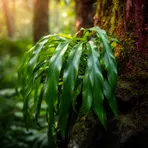
A tropical fern with leathery leaves that grows from Asia to Polynesia

A tropical fern with long leathery leaves like an oleander
Surface Forms
Morphology
Oleandra + neriiformis
This is a Linnaean binomial composed of a genus name (Oleandra) and a specific epithet; a learner who knows 'Oleandra' can reasonably infer that the phrase names a species of that genus (i.e., a tropical fern). However, 'neriiformis' is not an English word and its Latin derivation (meaning 'resembling Nerium/oleander') requires morphological or botanical knowledge beyond B1, so the meaning is only partially derivable.
Etymology
Oleandra neriiformis may come from Latin words that mean 'like an oleander'. The parts Oleandra and neriiformis point to the fern's leathery leaves that look like oleander leaves, so the name reminds you of its shape and texture.

